
NASA and Energy Department Sign Agreement to Advance Space Nuclear Power and Propulsion Systems
NASA and the U.S. Department of Energy have signed a memorandum of understanding to advance next-generation space nuclear power and propulsion.
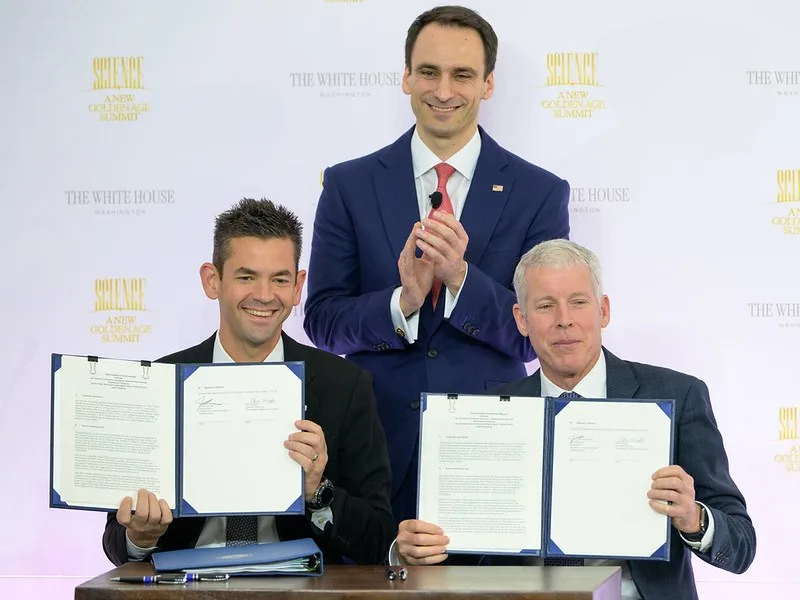
NASA and the U.S. Department of Energy have signed a memorandum of understanding to advance next-generation space nuclear power and propulsion. The agreement establishes an end-to-end collaboration framework spanning advanced research, fuel production, testing, launch integration, and operations. NASA Administrator Jared Isaacman and U.S. Secretary of Energy Chris Wright signed the agreement on Thursday, Oct.
8, 2026, during the Golden Age Summit in Washington. The partnership takes effect Sunday, Nov. 1. It builds on an executive order directing NASA to develop a launch-ready lunar surface reactor by 2030. Key upcoming milestones include the 2028 launch of the Space Reactor-1 Freedom and the planned Lunar Reactor-1 fission surface power system.
Additionally, NASA's 2028 Dragonfly mission to Saturn's moon Titan will use a radioisotope generator and heater units for power and warmth. The agencies also plan to supply 24 heater units to the European Space Agency's Rosalind Franklin Mars rover to protect instruments in extreme cold. Officials stated that nuclear power will allow spacecraft to operate longer and travel farther, supporting permanent lunar outposts and future Mars missions.
WireUnWired turns the supplied report into a clearer brief, preserves the original publisher and author details, and adds relevant context without hiding where the information came from.
Relevant WireUnWired coverage is connected so one story can lead into the larger technology context.
Original publication: 8 October 2026 21:16
 NASA — Recently PublishedNASA Glenn Research Center Invites Phase 1 Proposals for New Aerospace Power Systems Laboratory
 NASA — Recently PublishedNASA, International Partners Advance Work on Space Crops
 NASA — Recently PublishedNASA Launches New Metascience Initiative and Doctoral Fellowships to Accelerate Space Innovation