NASA’s AMPERE Challenge Aims to Cut Space Propellant Use Ten‑Fold
NASA’s latest competition could slash the amount of propellant needed for long‑duration space missions by a factor of ten.

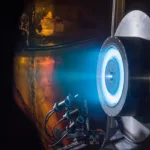
NASA’s latest competition could slash the amount of propellant needed for long‑duration space missions by a factor of ten. The Hall thruster, the heart of the challenge, uses an electric field to accelerate a gas—usually krypton—into a narrow beam, producing thrust with far less fuel than chemical rockets.
This efficiency means satellites and robotic explorers could stay in orbit or travel farther for the same launch mass, but the technology is still in the prototype stage. The AMPERE Challenge is the first of NASA’s Tech Maturation Prize series, designed to fast‑track breakthrough tech into real missions.
The prize offers $500,000, split between two U.S. companies that win the competition. By providing this money, NASA hopes to remove the financial barrier that keeps many promising designs from reaching flight readiness. The challenge is open only to U.S. firms, so it will strengthen domestic expertise in electric propulsion.
The funding is not a grant but a reward for proven progress, which could accelerate commercialization faster than traditional research contracts.
Teams advance through three phases.
In Phase 1, they submit a concept design, manufacturing plan, and cost and performance projections; NASA may pick two winners to move on.
Phase 2 gives the selected teams free access to NASA’s Hall thruster technology and the chance to build prototypes with guidance from Glenn and JPL experts.
Phase 3 tests those prototypes at NASA Glenn at no cost, allowing teams to validate performance before commercial deployment.
Only two teams can win, so the competition is highly selective.
The deadline to register is January 27, 2027, at 5 p.m.
EST.
Companies that miss this window will have to wait for the next cycle, which could delay the introduction of more efficient propulsion systems into the market.
The challenge’s tight timeline underscores NASA’s urgency to bring electric propulsion to the next generation of missions.
Our read: If the AMPERE Challenge succeeds, it could shift the balance of space propulsion, making deep‑space missions cheaper and more sustainable.
By reducing propellant needs, future missions could carry more science payloads or launch from smaller rockets, expanding the reach of both NASA and commercial partners.
Watch how the selected teams use the free access to NASA’s krypton‑based technology—this could be the first step toward a new era of electric‑powered exploration.
The story so far
Earlier coverage connected by shared names and topics. Follow the dates to see how coverage developed; these links do not imply every article describes the same event.
 NASA Offers $500,000 to Build the Next Generation of Space Thrusters
NASA is turning to private industry to build the propulsion systems that could power future space exploration. The agency launched the Advanced…
Connected by: ChallengeEARLIER COVERAGE- When the Saturn V Shook Florida and Restored NASA's Hope
When NASA unleashed the Saturn V rocket for its maiden voyage on November 9, 1967, the sheer force caught onlookers entirely off…
Connected by: SpaceEARLIER COVERAGE - NASA’s Space Apps Hackathon Draws Record Crowds With Global Data
Nearly two hundred thousand people just spent two days tackling planetary problems using government data. NASA reports that its annual Space Apps…
Connected by: ChallengeEARLIER COVERAGE - NASA’s Thanksgiving Tribute: Volunteers Power Space and Earth Science
When NASA says thank you, it’s because volunteers are the unseen engine behind its discoveries. These citizen scientists gather data, write code,…
Connected by: SpaceEARLIER COVERAGE - NOWNASA’s AMPERE Challenge Aims to Cut Space Propellant Use Ten‑FoldCURRENT UPDATE



Original publication: 18 November 2026 23:42