
FlexRAM: If you are interested in flexible electronics, you might have heard of organic thin-film transistors that can bend and twist without breaking. These transistors are promising for applications such as wearable devices, smart textiles, and flexible displays. But what about memory devices that can store and retrieve data on these flexible circuits? That’s where FlexRAM comes in.
FlexRAM: The Liquid Metal Memory
The Inspiration from Neural Communication
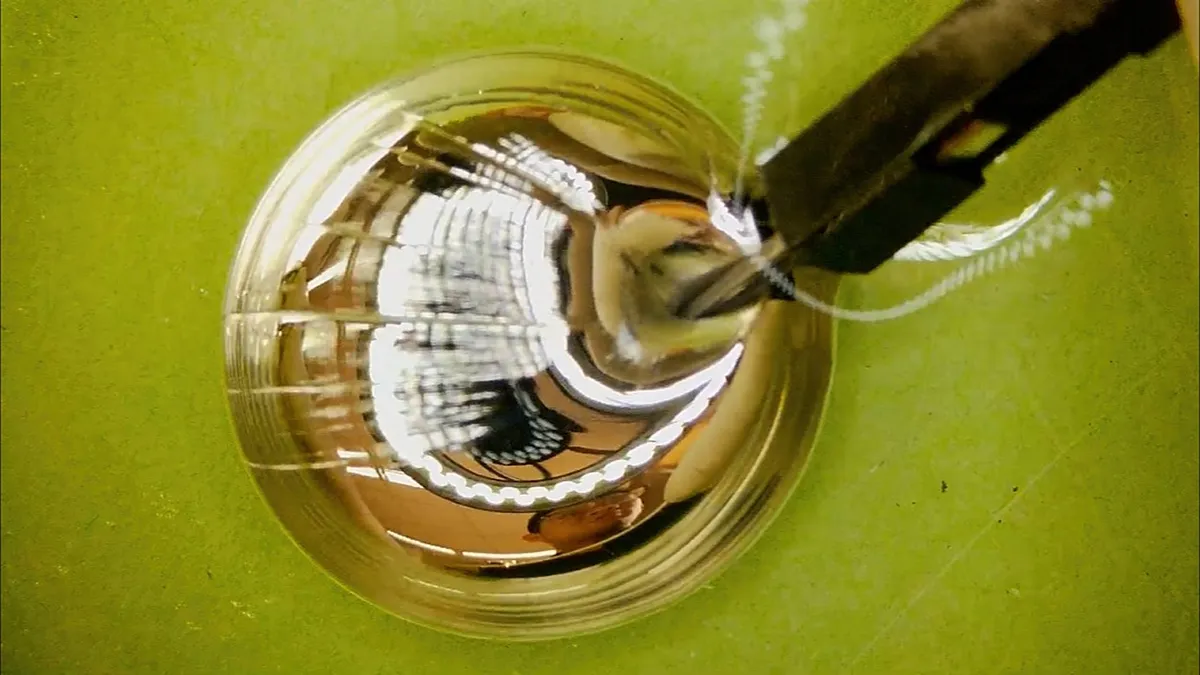
FlexRAM is a novel type of resistive random-access memory (RRAM) that uses liquid metal as the switching material. RRAM is a non-volatile memory technology that stores data by changing the resistance of a thin film between two electrodes. Unlike conventional RRAM, which uses solid-state materials such as metal oxides or organic molecules, FlexRAM uses gallium-based liquid metal (GLM) droplets that can flow and deform in a solution environment.
The researchers from Tsinghua University, in Beijing, who developed FlexRAM, were inspired by the way neurons communicate in the brain. Neurons use electrical signals to transmit information, and these signals are modulated by the opening and closing of ion channels on the cell membrane. Similarly, FlexRAM uses electrical pulses to control the oxidation and reduction of the liquid metal droplets, which changes their resistance and thus stores data.

To write data, a positive or negative voltage pulse is applied to the liquid metal droplet. A positive pulse causes the liquid metal to oxidize, forming a thin layer of gallium oxide on its surface. This increases the resistance of the droplet, corresponding to a logic “1”. A negative pulse reverses this process, reducing the oxide layer and restoring the low resistance state of the droplet, corresponding to a logic “0”. To read data, a small voltage is applied to measure the resistance of the droplet.
Demonstrating Feasibility and Performance
The researchers demonstrated the feasibility of FlexRAM by encoding a string of letters and numbers into an array of eight liquid metal droplets, equivalent to one byte of data. They used a computer program to convert the digital signal into analog pulses that controlled the oxidation and reduction of the droplets. They also showed that FlexRAM can operate under various bending and twisting conditions, without affecting its performance.