Rocket Lab Successfully Launches Three HawkEye 360 Signals-Intelligence Satellites to Orbit on October 23
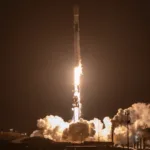
Rocket Lab successfully deployed three private signals-intelligence satellites into low Earth orbit on October 23. The mission, playfully named "We're Not Hawking Around," lifted off aboard an Electron rocket from the company's New Zealand launch site at 3:11 a.m.

Rocket Lab successfully deployed three private signals-intelligence satellites into low Earth orbit on October 23. The mission, playfully named "We're Not Hawking Around," lifted off aboard an Electron rocket from the company's New Zealand launch site at 3:11 a.m. EDT. The payload consists of three "Hawk" spacecraft built for Virginia-based HawkEye 360.
Operating at a planned altitude of 323 miles, these satellites scan the globe for radio frequency emissions across the spectrum. HawkEye 360 uses this collected data for maritime tracking, detecting satellite navigation jamming, monitoring radar, mapping communications, and supporting space defense. The company provides the resulting analytics to the U.S. government and its allies to aid strategic decision-making.
This flight marks HawkEye 360's continued expansion, following a separate launch of three satellites on a SpaceX rideshare mission just two days prior. The company has now sent nearly 50 spacecraft to orbit since its initial launch in 2018. For Rocket Lab, the mission represents its 98th launch overall and its 19th of 2026.
The story so far
Earlier coverage connected by shared names and topics. Follow the dates to see how coverage developed; these links do not imply every article describes the same event.
 SpaceX launches 21 military data transport satellites for the U.S. Space Force from California.
SpaceX launched a Falcon 9 rocket carrying 21 data transport satellites for the U.S. Space Force from California on October 10. The…
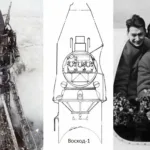
Connected by: OctoberEARLIER COVERAGE- On October 12, 1964, the Soviet Union launched Voskhod 1, carrying the first multi-person crew into orbit.
On October 12, 1964, the Soviet Union launched Voskhod 1, sending the first crew of multiple people into orbit. Three Russian cosmonauts…
Connected by: OctoberEARLIER COVERAGE - SpaceX Crew-12 astronauts discussed how viewing Earth from orbit transformed their perspectives during an October 15 press conference.
Astronauts from the SpaceX Crew-12 mission shared how seeing Earth from orbit deeply changed their perspectives during a press conference on Thursday…
Connected by: OctoberEARLIER COVERAGE - NASA Successfully Tests CASALS Airborne Prototype to Create Continuous 3D Maps of Earth's Surface
NASA researchers have developed a new instrument designed to eliminate large unmapped gaps in satellite data by creating continuous three-dimensional maps of…
Connected by: SuccessfullyEARLIER COVERAGE - NOWRocket Lab Successfully Launches Three HawkEye 360 Signals-Intelligence Satellites to Orbit on October 23CURRENT UPDATE


Original publication: 23 October 2026 16:27