
NASA Launches SSPICY Mission to Test Autonomous In-Space Inspection and Space Debris Reduction Technologies
A new NASA-supported spacecraft will approach inactive satellites and rocket bodies to test inspection technologies that could help reduce space debris. The Small Spacecraft Propulsion and Inspection Capability, or SSPICY, mission launched on October 1 from Vandenberg Space Force Base in California.
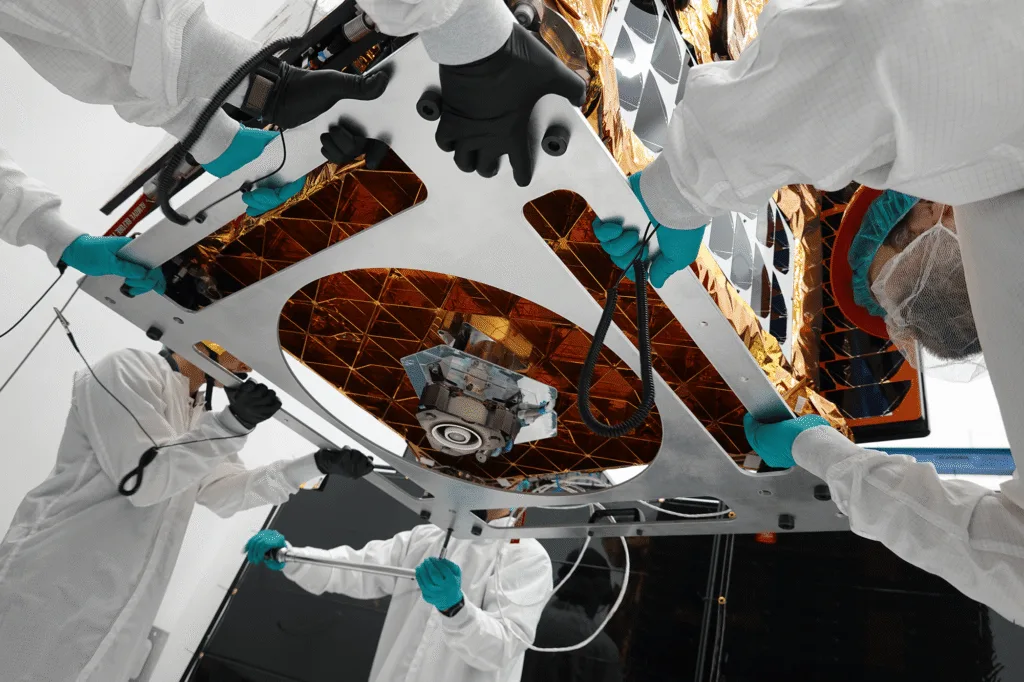
A new NASA-supported spacecraft will approach inactive satellites and rocket bodies to test inspection technologies that could help reduce space debris. The Small Spacecraft Propulsion and Inspection Capability, or SSPICY, mission launched on October 1 from Vandenberg Space Force Base in California. Built by Starfish Space, the washing-machine-sized Otter spacecraft will begin navigating near up to four inoperable U.S. space objects in early 2027.
It will use autonomous guidance software, computer vision, and sensors to make real-time navigation decisions without heavy ground control input. An electric propulsion system and an articulating robotic boom will help the spacecraft maneuver between different orbits. The mission will test these technologies together as an integrated system for the first time.
While the Otter spacecraft will not touch or dock with any targets, it will gather data on their spin rates, orientation, and surface conditions. The project aims to pave the way for future autonomous in-space repairs, servicing, and the safe removal of debris by pulling defunct objects into Earth's atmosphere.
NASA funds and manages the technology demonstration through its Small Spacecraft and Distributed Systems program.
WireUnWired turns the supplied report into a clearer brief, preserves the original publisher and author details, and adds relevant context without hiding where the information came from.
Relevant WireUnWired coverage is connected so one story can lead into the larger technology context.
Original publication: 9 October 2026 00:26
 NASA — Recently PublishedNASA Tasks L3Harris Technologies With Building Final Test Telescope for the LISA Gravitational Wave Mission
 NASA — Recently PublishedNASA Launches New Metascience Initiative and Doctoral Fellowships to Accelerate Space Innovation
 NASA — Recently PublishedNASA SpaceX Crew-13 Successfully Launches on Falcon 9 Rocket to International Space Station