How a Dying Spacecraft Solved the Mystery of Mars
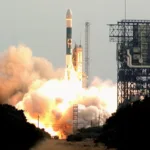
Solar wind stripped away the ancient atmosphere of Mars, transforming a wet world into a frozen desert. NASA launched the MAVEN orbiter on November 18, 2013, to track this exact atmospheric leak.

Solar wind stripped away the ancient atmosphere of Mars, transforming a wet world into a frozen desert. NASA launched the MAVEN orbiter on November 18, 2013, to track this exact atmospheric leak. The spacecraft was built to measure how solar storms blast away carbon dioxide and other gases that once trapped surface heat.
Without that greenhouse blanket, liquid water evaporated into space over billions of years. Our read: MAVEN proved that planetary death happens from the top down, driven entirely by invisible solar radiation. Designed for a single Earth year of study, the probe instead survived for over a decade in orbit.
It relied on three instrument suites to analyze atmospheric composition and solar wind interactions. As the aging probe degraded, NASA repurposed it as a communications relay for other Martian missions. That extended life ended in December 2025 when an uncontrollable spin triggered a fatal power loss behind the planet.
NASA officially declared the mission over in June 2026 after months of failed recovery attempts.
Louise Prockter, NASA director of planetary science, noted that MAVEN data provides key radiation safety insights for future human missions.
Shannon Curry, the principal investigator, described the end of the 12.5-year mission as losing a loved one.
Watch whether future crewed mission designs heavily incorporate these final atmospheric safety datasets.
The story so far
Earlier coverage connected by shared names and topics. Follow the dates to see how coverage developed; these links do not imply every article describes the same event.
 Galileo’s Final Dance: A Dying Probe’s Last Flyby of Jupiter’s Red Moon
On Nov. 2002, NASA’s Galileo was a ghost ship, its fuel tanks nearly empty, yet it still had one more swing by…
Connected by: DyingEARLIER COVERAGE- How a Decades-Long Silence Ended NASA's Most Reliable Mars Pioneer
When NASA launched the Mars Global Surveyor on November 7, 1996, it broke a dry spell that had lasted nearly twenty years.…
Connected by: Red PlanetEARLIER COVERAGE - How Gemini 12 Solved NASA's Deadliest Space Problem
Before Buzz Aldrin stepped outside his spacecraft in 1966, spacewalks were a recipe for pure exhaustion. Early astronauts burned through energy and…
Connected by: SolvedEARLIER COVERAGE - How a blinding dust storm helped Mariner 9 rewrite the Martian map
When NASA sent Mariner 9 toward Mars in 1971, scientists expected another boring lunar twin. Earlier flybys showed a heavily cratered surface,…
Connected by: Red PlanetEARLIER COVERAGE - NOWHow a Dying Spacecraft Solved the Mystery of MarsCURRENT UPDATE


Original publication: 19 November 2026 02:40