NASA Tasks L3Harris Technologies With Building Final Test Telescope for the LISA Gravitational Wave Mission
NASA has taken a key step toward building an all-glass telescope for the upcoming Laser Interferometer Space Antenna mission, a space observatory designed to detect gravitational waves.
NASA has taken a key step toward building an all-glass telescope for the upcoming Laser Interferometer Space Antenna mission, a space observatory designed to detect gravitational waves. L3Harris Technologies will design, assemble, and integrate the new test telescope, known as the Engineering Test Unit. This hardware represents a final step before future flight production.
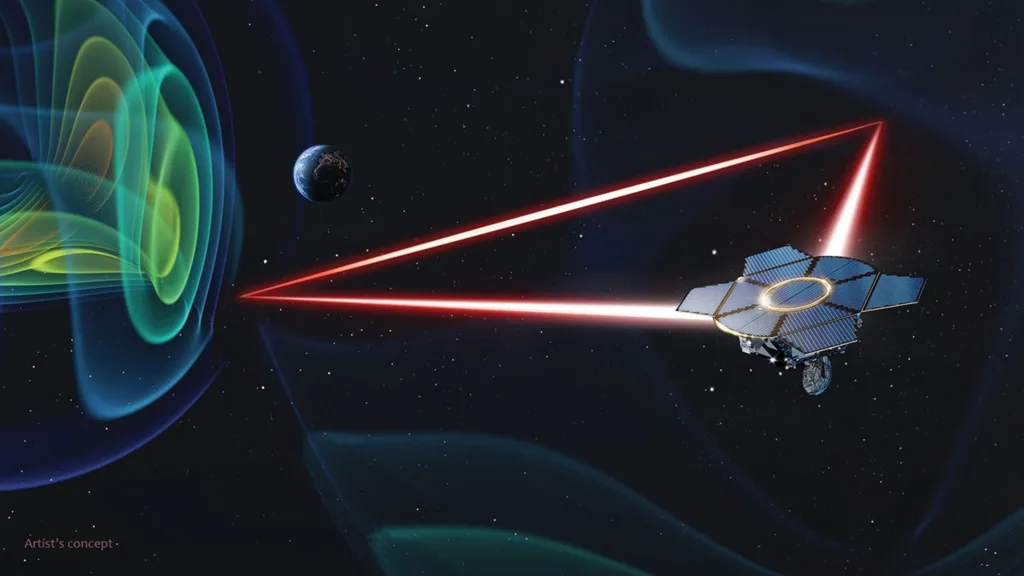
The European Space Agency leads the mission, which is slated for launch in the mid-2030s. NASA is contributing the telescopes, critical hardware, and engineering support. The mission will deploy three satellites into an Earth-following orbit to form a triangular array stretching 1.6 million miles on each side. Each satellite will use two telescopes to transmit and receive infrared laser beams, measuring tiny distance changes caused by passing gravitational waves.
NASA project scientist Ira Thorpe said these changes are smaller than the width of a helium atom. The all-glass telescopes will be made entirely of a ceramic-glass composite called Zerodur, which resists shape changes across varying temperatures. Following a 2024 prototype delivery and rigorous testing, the team is applying its lessons to this new unit.
NASA states this will be the final pre-flight unit and the first optical telescope delivery to the European Space Agency.
WireUnWired turns the supplied report into a clearer brief, preserves the original publisher and author details, and adds relevant context without hiding where the information came from.
Relevant WireUnWired coverage is connected so one story can lead into the larger technology context.
Original publication: 8 October 2026 21:01