
NASA Hubble Data Solves Astronomical Cold Case With Discovery of Second-Generation Planet
Researchers using data from NASA’s Hubble Space Telescope have solved an astronomical cold case, discovering that the white dwarf star HS 0209+0832 may host a second-generation planet.
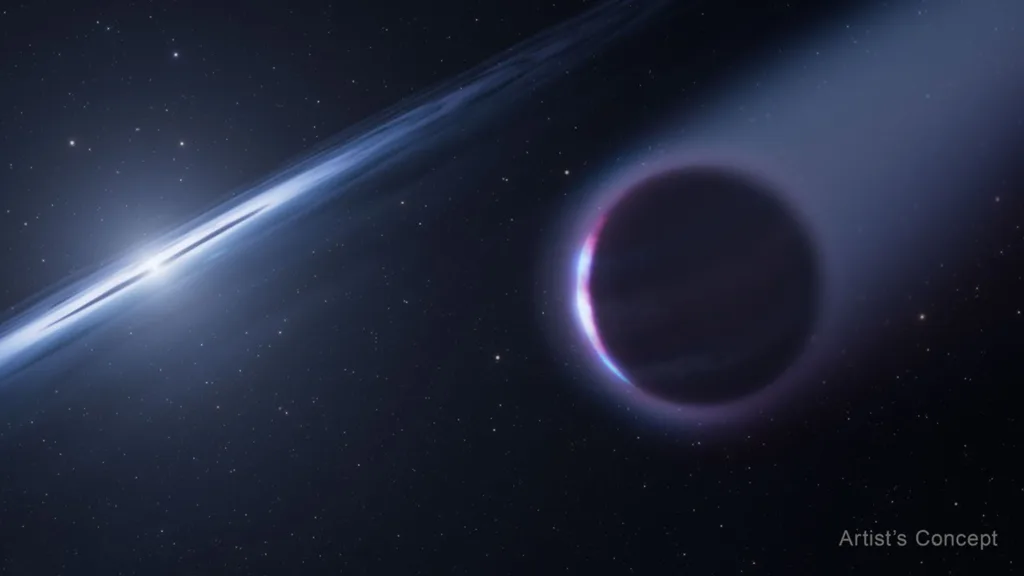
Researchers using data from NASA’s Hubble Space Telescope have solved an astronomical cold case, discovering that the white dwarf star HS 0209+0832 may host a second-generation planet. Published in Nature Astronomy on Monday, the study centers on archival data from 1999 when Hubble first observed the star and recorded roughly 100 unidentified chemical features.
Lead author and University of Warwick doctoral candidate Jamie Williams used an updated chemical database to determine that the mystery features match the element niobium. A white dwarf is the core left behind when a low-mass star dies, and a second-generation planet forms from the material the dying star ejects into space.
Niobium and other heavy elements are synthesized only in the extreme conditions of dying stars, not in standard stellar cores. The team confirmed the Hubble findings using data from the retired FUSE mission. Additionally, NASA’s TESS mission detected brightness variations showing a Jupiter-sized gas giant orbiting about 3.7 million miles from the star.
The hot white dwarf is stripping the planet's atmosphere, creating a material disk that falls onto the star and reveals the niobium signature.
Williams plans to use Hubble over the next several years to study how these rare planetary bodies form
Original publication: 5 October 2026 20:30