Voyager 1’s Light‑Day Milestone: Why It’s a Decade Ahead of Its Twin
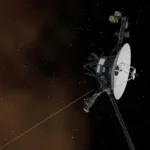
Voyager 1 will soon be a full light‑day from Earth, meaning a signal will take 24 hours to return. At 16 billion miles (25 billion km) the craft is already farther from us than any other human‑made object.
Voyager 1 will soon be a full light‑day from Earth, meaning a signal will take 24 hours to return. At 16 billion miles (25 billion km) the craft is already farther from us than any other human‑made object. The milestone is a testament to the speed the probe gained during its planetary tour.
The gap between the two twin probes is a product of deliberate trajectory choices. Voyager 1 was steered to a faster path that let it reach Jupiter on March 5, 1979, four months before Voyager 2. Its speed of 3.5 astronomical units per year—about 10 km/s faster than Voyager 2’s 3.1 AU/yr—was achieved by a tighter slingshot around Saturn and a focus on Titan’s rings.
Gravity assists were the engine that made the difference. Each flyby added roughly 10 km/s at Jupiter, 5 km/s at Saturn, 2 km/s at Uranus, and then a 2 km/s loss at Neptune when Voyager 2 turned toward Triton. Those incremental gains pushed Voyager 1 out of the solar system in 2012, while Voyager 2 lagged until 2018.
Now that Voyager 1 has crossed the light‑day threshold, NASA is extending its life by turning off instruments and redistributing power in a “Big Bang” procedure.
The craft’s radioisotope thermoelectric generators must keep delivering electricity for the next decade, so every watt is carefully allocated.
The result is a longer window for interstellar science, but only as long as the nuclear fuel lasts.
Our read: the faster trajectory was a conscious trade‑off to prioritize Saturn and Titan, sacrificing a slower but more extensive Uranus–Neptune tour.
That decision paid off in speed, but it also means Voyager 2 will take nearly ten more years to hit the same milestone.
As the two probes continue their lonely journey, the light‑day milestone reminds us how a few minutes of planning can shape a mission’s destiny.
The story so far
Earlier coverage connected by shared names and topics. Follow the dates to see how coverage developed; these links do not imply every article describes the same event.
 Voyager Hits a Light-Day Out as November Skies Light Up
A human-made machine is now so far away that light takes a full day to reach it. This November, NASA notes that…
Connected by: VoyagerEARLIER COVERAGE- Voyager 1 Crosses the One Light-Day Threshold After Nearly 50 Years in Space
A radio signal sent from Earth now needs a full 24 hours to reach NASA's Voyager 1. Launched in 1977, the spacecraft…
Connected by: VoyagerEARLIER COVERAGE - Voyager 1 Reaches One Light-Day Out After Nearly 50 Years in Space
A radio message sent to Voyager 1 now requires a full 24 hours to reach the spacecraft. NASA states that the interstellar…
Connected by: VoyagerEARLIER COVERAGE - NASA Invites Earth to Shine a Light for Voyager 1’s One‑Light‑Day Milestone
NASA is asking people worldwide to light up the night sky as Voyager 1 approaches a historic distance from Earth. The probe…
Connected by: MilestoneEARLIER COVERAGE - NOWVoyager 1’s Light‑Day Milestone: Why It’s a Decade Ahead of Its TwinCURRENT UPDATE



Original publication: 18 November 2026 03:30