
NASA Conducts Tunnel Tests at Glenn Research Center to Study Supercooled Large Droplet Icing Hazards
NASA is testing methods to improve aviation safety by studying a rare icing hazard called supercooled large droplet icing. This hazard happens when planes fly through clouds filled with very cold, liquid water drops that stay liquid below 32 degrees Fahrenheit.
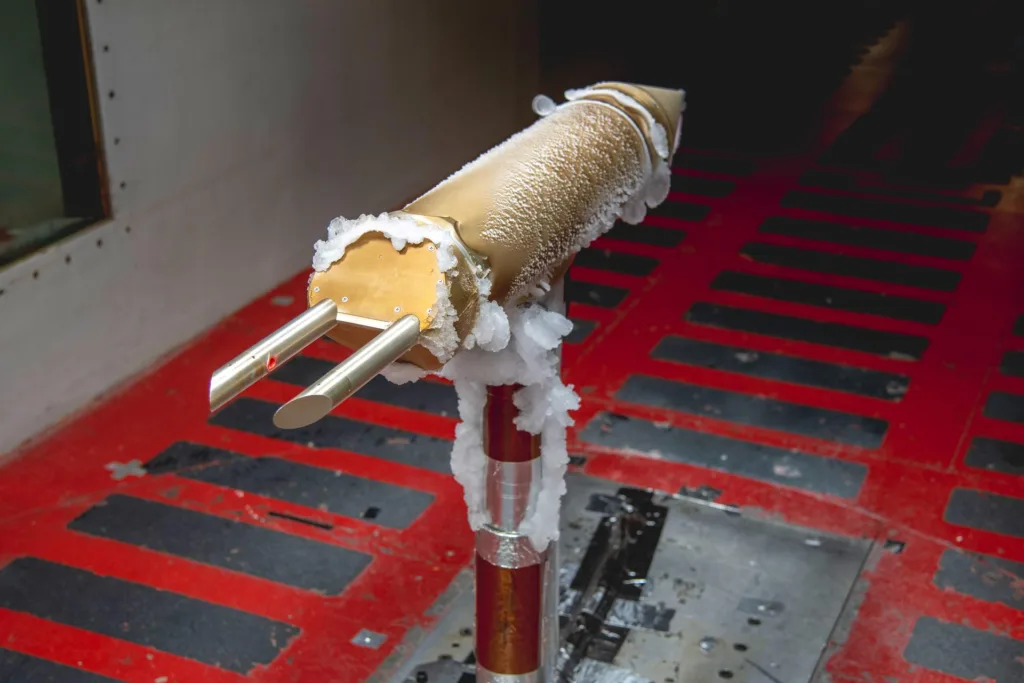
NASA is testing methods to improve aviation safety by studying a rare icing hazard called supercooled large droplet icing. This hazard happens when planes fly through clouds filled with very cold, liquid water drops that stay liquid below 32 degrees Fahrenheit. While normal cloud drops measure between 2 and 100 microns wide, these rare drops can reach 2,000 microns in diameter.
They can hit parts of an aircraft located behind standard ice protection systems. Researchers are running tests at the Icing Research Tunnel located at the Glenn Research Center in Cleveland. These tests support the Subsonic Flight Demonstrator project, which is part of NASA’s Research and Technology Mission Directorate.
Teams used new probes from June 8 to 11, 2026, to measure drops larger than 45 microns in real time. They will combine these findings with data from other probes that measure smaller drops to map the complete droplet size spectrum. The project team will share the final results with the aerospace community after they finish analyzing the data.
Original publication: 5 October 2026 20:57
 NASA — Recently PublishedNASA Outlines Langley Research Center Contact Details Along with Recent Mission and Research Updates
 NASA — Recently PublishedNASA Concludes Six-Week INSPYRE Research Campaign in Western North America to Study Wildfire-Generated Pyrocumulonimbus Clouds
 NASA — Recently PublishedResearchers at NASA Langley Research Center Test Pressure Sensitive Paint on Benchmark Supercritical Wing Model