
NASA Concludes Six-Week INSPYRE Research Campaign in Western North America to Study Wildfire-Generated Pyrocumulonimbus Clouds
NASA recently completed the INSPYRE (INjected Smoke and PYRocumulonimbus Experiment) campaign, a six-week summer research effort across western North America to study pyrocumulonimbus clouds, or pyroCbs.
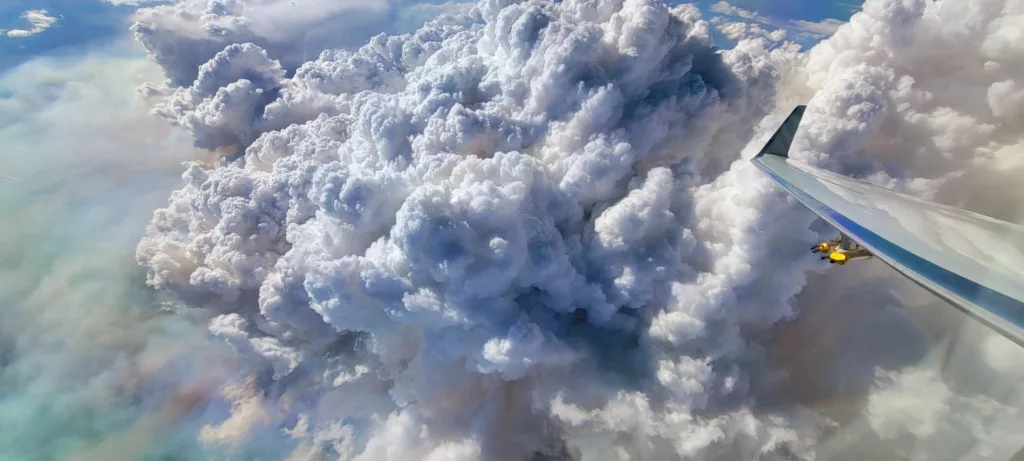
NASA recently completed the INSPYRE (INjected Smoke and PYRocumulonimbus Experiment) campaign, a six-week summer research effort across western North America to study pyrocumulonimbus clouds, or pyroCbs. These rare, fire-generated weather phenomena occur when intense wildfires form massive smoke chimneys that reach 30,000 to 50,000 feet into the stratosphere, producing lightning, rain, and dangerous winds.
Led by principal investigators Olga Kalashnikova of the Jet Propulsion Laboratory and Dave Peterson of the Naval Research Laboratory, along with ground observation lead Neil Lareau of the University of Nevada, Reno, the project used a National Center for Atmospheric Research (NCAR) Gulfstream jet, a high-flying NASA ER-2 aircraft, and sensor-equipped ground trucks.
Researchers collected smoke particles, sampled gases, and monitored radiation. During an August 26 flight, the team unexpectedly encountered a fresh pyroCb plume over the Wildhorse grass fire in eastern Idaho. The team plans to use these data to understand how these clouds form, transport smoke, and affect weather and climate models, potentially leading to better severe weather warnings for firefighters.
WireUnWired turns the supplied report into a clearer brief, preserves the original publisher and author details, and adds relevant context without hiding where the information came from.
Relevant WireUnWired coverage is connected so one story can lead into the larger technology context.
Original publication: 2 October 2026 22:04
 Space.comNASA Concludes Historic OSIRIS-REx Asteroid Sampling Mission After Returning Bennu Material to Earth
 Space.comNASA Outlines Complex Flight Plan and Testing Procedures for the Artemis III Moon-Lander Mission
 Space.comOn this day in space! Oct. 23, 2007: NASA launches Harmony module to ISS on STS-120 space shuttle mission