NASA Selects Three New Scientific Investigations and Payload Suites to Support Future Moon Base Missions
NASA selected three new scientific investigations and payload suites to advance lunar knowledge and help establish humanity’s first lunar outpost, known as Moon Base.
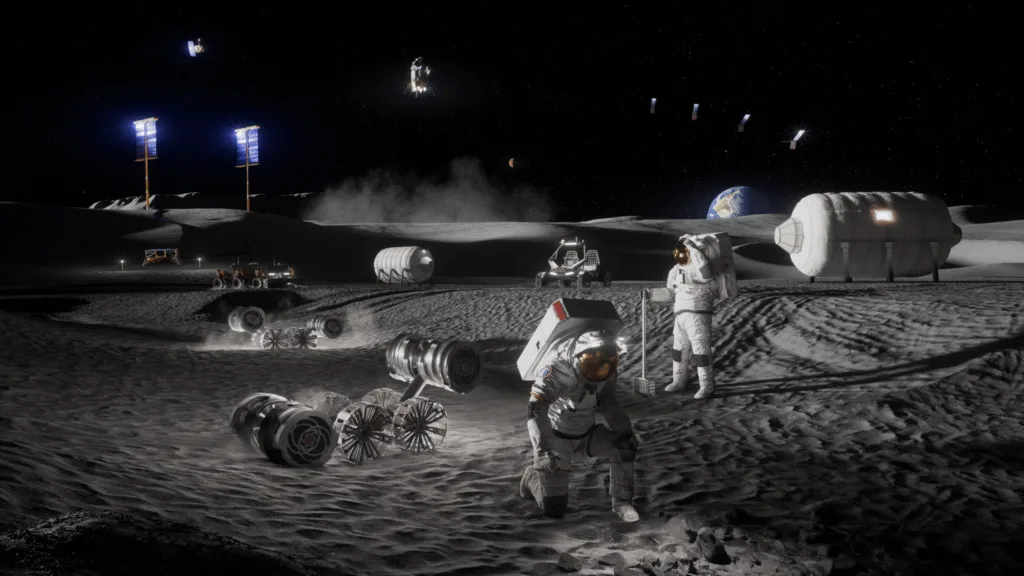
NASA selected three new scientific investigations and payload suites to advance lunar knowledge and help establish humanity’s first lunar outpost, known as Moon Base. Chosen through the Payloads and Research Investigations on the Surface of the Moon (PRISM) program, these payloads will travel to the lunar surface via the Commercial Lunar Payload Services (CLPS) initiative as part of the Moon Base Program.
The three selected suites include the Lunar Environment Monitoring Station – South Pole (LEMS-SP), led by Dr. Mehdi Benna of the University of Maryland, Baltimore County, which will monitor environmental hazards and seismic events. The second suite is the Geophysical Investigation for Mapping Lunar Interior (GIMLI), led by Dr.
Nathaniel Putzig of the Planetary Science Institute, which will deploy at the Marius Hills Pit to search for subterranean lava tubes that could serve as natural shelters. The third suite is the Distribution of Ice and Surface Characteristics Observatory (DISCO), led by Dr. Ariel Deutsch of NASA’s Ames Research Center, which will measure hidden ice and surface characteristics.
According to NASA, these investigations aim to minimize risks, map natural shelters, and assess environmental hazards to support sustained human presence for future Artemis and Moon Base missions.
Original publication: 1 October 2026 02:41