Did the Soviet Union really fire a cannon from a space station?
During the Cold War, the Soviet Union mounted and fired a rapid-fire cannon aboard a secret military space station, according to historical accounts. The weapon was built for the Almaz military reconnaissance program and carried into orbit aboard the Salyut 3 spacecraft in 1974.
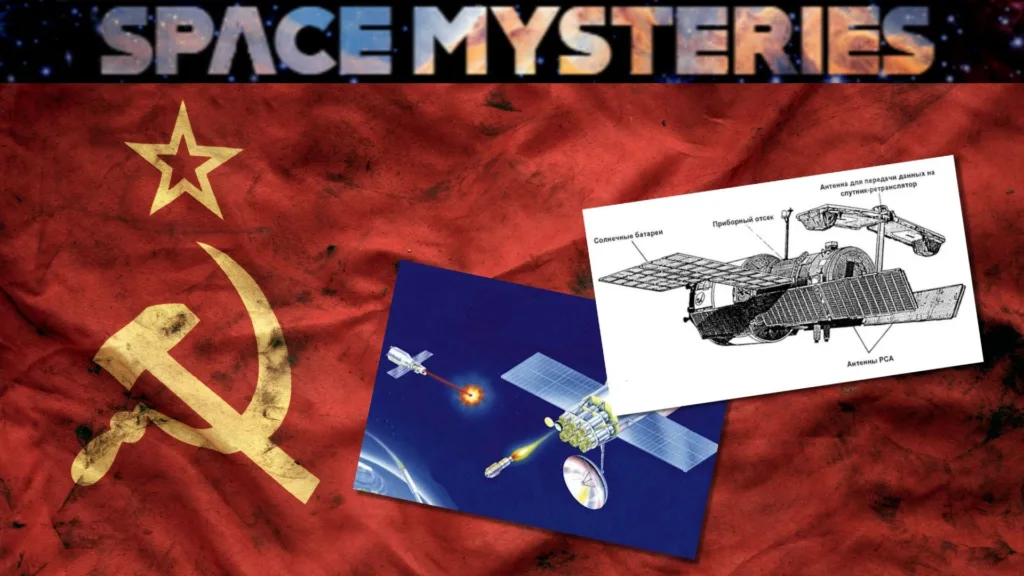
During the Cold War, the Soviet Union mounted and fired a rapid-fire cannon aboard a secret military space station, according to historical accounts. The weapon was built for the Almaz military reconnaissance program and carried into orbit aboard the Salyut 3 spacecraft in 1974. Historian Anatoly Zak confirmed the weapon's existence and appearance after Russian military television broadcast hardware footage, enabling him to build a detailed 3D reconstruction.
Designed by Aleksandr Nudelman's bureau, the weapon was adapted from Aron Rikhter's aircraft gun technology. Historical accounts vary on specifications, but Zak identified it as a 14.5-millimeter cannon. Because the weapon attached directly to the station, aiming required orienting the entire 20-ton spacecraft. The cannon was fired in space on January 24, 1975, after the crew departed, as officials feared the recoil in microgravity.
Station thrusters fired simultaneously to counter the recoil, and an estimated 20 rounds were discharged before burning up in the atmosphere. It remains unclear what engineers learned from the test, as no detailed results were made public. Soviet officials likely found the weapon impractical, shifting focus toward uncrewed reconnaissance satellites and interceptor missiles.
The story so far
Earlier coverage connected by shared names and topics. Follow the dates to see how coverage developed; these links do not imply every article describes the same event.
 Roscosmos schedules upcoming testing milestones for its long-delayed PTK NP crewed spacecraft ahead of a planned 2028 debut.
Russia’s state-backed space corporation, Roscosmos, continues development on its long-delayed next-generation crewed spacecraft, now referred to as PTK NP rather than Eagle…
Connected by: RussianEARLIER COVERAGE- SpaceX describes surgical intervention before launch of latest crew mission
On Thursday, October 1, 2026, a SpaceX Falcon 9 rocket and Crew Dragon spacecraft lifted off from Cape Canaveral Space Force Station,…
Connected by: RussianEARLIER COVERAGE - Heading Home: NASA’s SpaceX Crew-12 Concludes Station Science Mission
NASA’s SpaceX Crew-12 mission will conclude when the crew returns in early October 2026. The team includes NASA astronauts Jessica Meir and…
Connected by: ColdEARLIER COVERAGE - NASA Hubble Data Solves Astronomical Cold Case With Discovery of Second-Generation Planet
Researchers using data from NASA’s Hubble Space Telescope have solved an astronomical cold case, discovering that the white dwarf star HS 0209+0832…
Connected by: ColdEARLIER COVERAGE - NOWDid the Soviet Union really fire a cannon from a space station?CURRENT UPDATE


Original publication: 9 October 2026 20:30