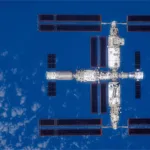
Next Space Station Supply Run Targets Cancer Drugs and Muscle Loss Research
A Cygnus XL spacecraft will carry a heavy load of science investigations toward the International Space Station this month. NASA and Northrop Grumman target November 29 for the liftoff from Cape Canaveral Space Force Station in Florida.

A Cygnus XL spacecraft will carry a heavy load of science investigations toward the International Space Station this month. NASA and Northrop Grumman target November 29 for the liftoff from Cape Canaveral Space Force Station in Florida. A SpaceX Falcon 9 rocket will power the cargo vessel into orbit. This flight, designated Northrop Grumman CRS-25, packs roughly 11,000 pounds of supplies and equipment into the hold.
That mass equals about five small cars worth of gear heading to the orbiting laboratory. Inside that cargo manifest, several medical and technological studies aim to improve life back on Earth. The payload features experiments designed to refine drug delivery for cancer and osteoarthritis while tracking how cancer spreads.
Other onboard tests will target treatments for muscle loss in microgravity. Astronauts will also test new radiation sensors and food production methods tailored for long-duration deep space missions. Our read: commercial cargo flights have shifted from basic pantry drops to vital pharmaceutical testing hubs. Once the spacecraft reaches orbit, NASA astronauts Jessica Watkins and Luke Delaney will operate the Canadarm2 robotic arm to capture the vehicle.
Ground controllers will then lock the capsule onto the Earth-facing port of the station Unity module for unloading.
The spacecraft is scheduled to remain docked until May 2027.
It will then depart with thousands of pounds of unneeded items before burning up safely during re-entry.
Northrop Grumman named this particular vehicle the S.S.
James A.
Lovell in honor of the former astronaut who flew four missions, including Apollo 13.
Prelaunch coverage starts online ahead of the late November window.
Will these pharmaceutical tests yield actionable therapies before the station retires?
The story so far
Earlier coverage connected by shared names and topics. Follow the dates to see how coverage developed; these links do not imply every article describes the same event.
 NASA's Next Telescope Will Hunt Ultraviolet Violence in a Quiet Cosmos
A quiet cosmic sea hides a turbulent engine of violent collisions and exploding stars. When NASA launches the Ultraviolet Explorer in 2031,…
Connected by: NextEARLIER COVERAGE- How Apollo 12 Turned a Moon Landing Into a Scientific Tool
When Apollo 12 launched on November 14, 1969, it faced a high-stakes challenge that went beyond merely reaching the moon. The previous…
Connected by: NovemberEARLIER COVERAGE - Surveyor 6’s 1967 Moon Hop Proves Lunar Liftoff, Paving Way for Apollo
On Nov. 17, 1967, a tiny probe on the moon lifted off, proving a concept that would carry astronauts home. NASA’s Surveyor…
Connected by: EarthEARLIER COVERAGE - SpaceX Dragon Departs ISS with 6,300 lbs of Science, Including 3D‑Bioprinted Blood Vessels
A SpaceX Dragon spacecraft is about to leave the International Space Station, carrying more than 6,300 pounds of science that could change…
Connected by: International Space StationEARLIER COVERAGE - NOWNext Space Station Supply Run Targets Cancer Drugs and Muscle Loss ResearchCURRENT UPDATE



Original publication: 19 November 2026 03:49