What's been driving Hawaii's lava fountains?
Researchers from the US Geological Survey have captured some of the best documentation yet of erupting lava fountains following a recent set of eruptions at Hawaii’s Kilauea volcano.
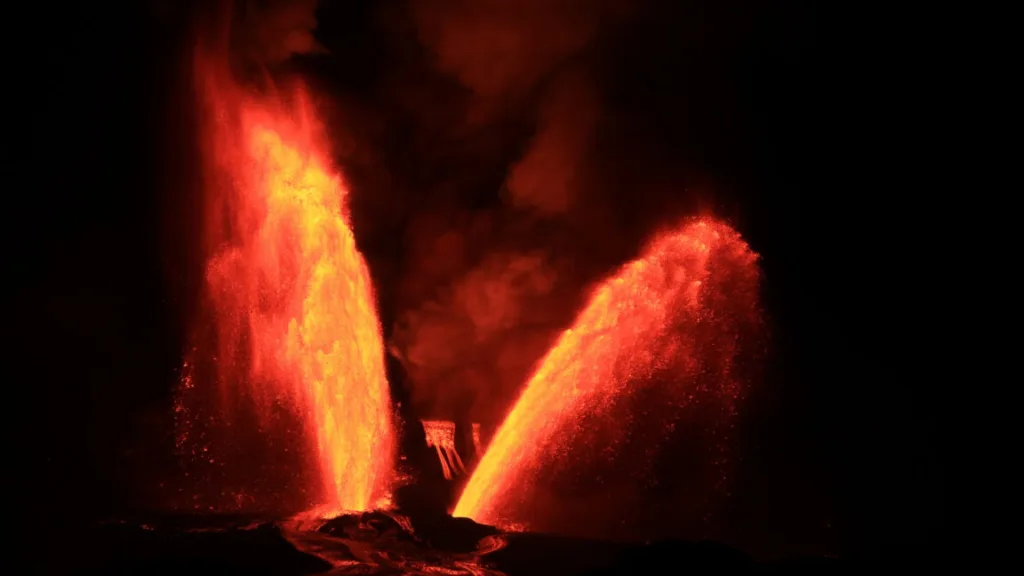
Researchers from the US Geological Survey have captured some of the best documentation yet of erupting lava fountains following a recent set of eruptions at Hawaii’s Kilauea volcano. While hotspot volcanism is usually sedate, specific locations like Mount Etna, Iceland, and Hawaii experience dramatic fountains reaching several hundred meters high.
According to a recent report in *Science*, scientists observed the Kilauea activity using 35 separate data-gathering stations. These instruments included seismic, infrasound, geodetic, gas, and visual and thermal cameras. Kilauea is Hawaii's youngest and most active volcano, but it has recorded only three fountaining episodes since 1823. The detailed observations matter because scientists are still not sure what powers these high-reaching fountains of molten rock.
Intensive study of Kilauea helps researchers compare real-world activity with existing ideas about how these energetic eruptions work. Previous work has identified a couple of lava residues within a few kilometers of the volcano's surface, helping build a clear picture of its internal structure. However, the exact mechanisms driving the intense spouting of molten rock remain unclear.
WireUnWired turns the supplied report into a clearer brief, preserves the original publisher and author details, and adds relevant context without hiding where the information came from.
Relevant WireUnWired coverage is connected so one story can lead into the larger technology context.
Original publication: 10 October 2026 02:35