Ukraine Says SpaceX’s Starshield Speed Limits Are Back, Threatening Drone Defense
When Ukrainian drones hit 161 km/h, they suddenly lose their satellite link. Starshield, the military variant of SpaceX’s Starlink, throttles or disables service above that speed, leaving drones blind to real‑time guidance.
When Ukrainian drones hit 161 km/h, they suddenly lose their satellite link. Starshield, the military variant of SpaceX’s Starlink, throttles or disables service above that speed, leaving drones blind to real‑time guidance. The loss means Ukrainian forces cannot track or intercept Russian Shahed drones that travel faster than the limit.
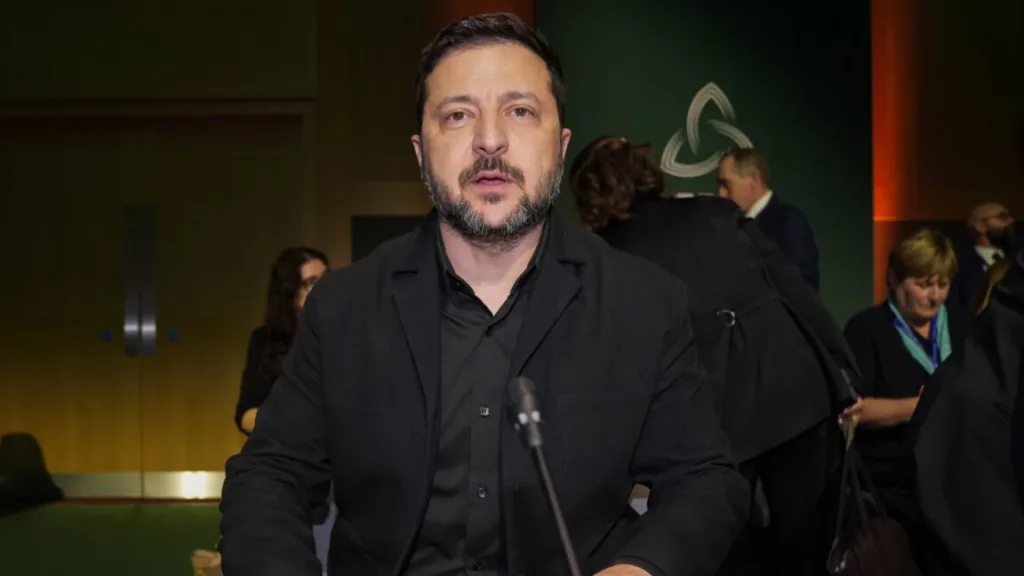
The reason for the speed cap remains opaque, raising questions about its origin. President Volodymyr Zelenskyy told the 9th European Political Community Summit in Dublin that the restriction is back in occupied territory. He said the limit is 161 km/h—about 100 mph—and that it hampers Ukraine’s ability to shoot down jet‑powered drones.
Without the speed, Ukrainian interceptors cannot keep pace, letting more Russian strikes hit civilian areas. The statement underscores the tactical gap created by the slowdown. SpaceX denied the claim, saying there has been no change. The company said any decisions on Starshield limits are made by the U.S. government, and the Pentagon inspector general’s office has declined to investigate who ordered the restrictions.
The lack of transparency means Ukrainian officials have little insight into the policy’s origin.
The gap in information fuels uncertainty on the battlefield.
Ukraine officials suspect the speed cap is a political tool aimed at pressuring Kyiv during recent peace talks with Russia.
A senior Ukrainian source told the Financial Times that Washington may be strengthening Russia’s position by limiting Ukraine’s defensive capabilities.
Our read is that the restriction could be a bargaining chip, using technology to influence diplomatic outcomes.
If true, it signals a troubling intersection of tech and geopolitics.
The European Commission called the limits unacceptable, demanding a swift restoration of Starshield services.
The EU’s stance highlights the broader concern that satellite connectivity is a strategic asset, not a commodity.
The next step will be to see whether the U.S. lifts the restriction or explains its rationale.
Watch for a clear answer, as the decision will shape Ukraine’s ability to defend its skies.
The story so far
Earlier coverage connected by shared names and topics. Follow the dates to see how coverage developed; these links do not imply every article describes the same event.
 Inside Starshield, SpaceX’s Secretive Military Satellite Network
For over a week, Ukrainian drone operators found their high-speed satellite links suddenly blocked above speeds of 100 miles per hour, hamstringing…
Connected by: StarshieldEARLIER COVERAGE- SpaceX Throttles Grok Bot Limits as AI Costs Bite
Over the Halloween weekend, users waking up to maxed-out AI limits discovered a spooky reality behind conversational assistants. Without warning, weekly caps…
Connected by: WithoutEARLIER COVERAGE - SpaceX Prepares to Catch Both Starship Stages in Historic Flight 15
SpaceX is about to make history by catching both halves of its Starship rocket in one launch. The company moved Super Heavy…
Connected by: StarlinkEARLIER COVERAGE - SpaceX Flies Second Mystery Military Mission in Six Days
Two classified military launches in six days reveal a relentless operational pace for SpaceX on the California coast. A Falcon 9 rocket…
Connected by: StarshieldEARLIER COVERAGE - NOWUkraine Says SpaceX’s Starshield Speed Limits Are Back, Threatening Drone DefenseCURRENT UPDATE




Original publication: 13 November 2026 00:39