SpaceX Caught a Starship. Now Comes the Hard Part.
SpaceX just pulled off the holy grail of spaceflight by snatching a returning Starship upper stage out of the air with its launch tower arms.
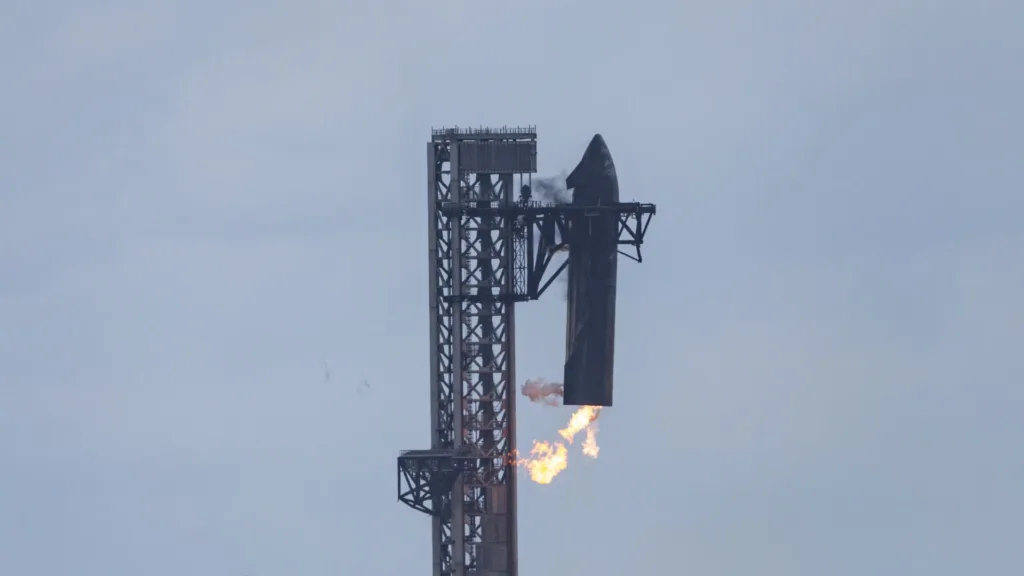
SpaceX just pulled off the holy grail of spaceflight by snatching a returning Starship upper stage out of the air with its launch tower arms. Yet that historic catch on Flight 15 leaves a mountain of unproven engineering between the company and its ultimate ambitions. The Super Heavy booster missed its own tower catch after a low-fuel alarm forced a Gulf of Mexico splashdown, proving the double-catch routine is not yet routine.
SpaceX has caught boosters three times before, but catching the upper stage is far tougher because it flies much higher and faster than the booster. Our read: That triumph masks a massive execution gap in the company's timeline. SpaceX envisions launching Starships up to 10,000 times a year by 2030 to feed massive orbital goals like a 100,000-satellite Starlink V3 network and a one-million-spacecraft Starmind AI constellation.
Today, low Earth orbit hosts about 11,000 active Starlink satellites in total, meaning the proposed cadence demands an unprecedented operational scale. But turning rockets around requires rapid refurbishment, and SpaceX has only reflown two boosters across months of delay, while never reusing a Ship at all. Deep-space ambitions face even steeper limits.
NASA selected Ship as the crewed lunar lander for the Artemis IV mission targeted for 2028, but SpaceX still needs to install life-support systems and finish a full-scale ground prototype cabin by the end of the year.
Furthermore, deep-space missions require Ship to refuel from an orbital depot using tanker variants because launching fully fueled is too heavy.
Musk cites six to eight tanker visits per mission, while outside experts estimate up to 22, and SpaceX has yet to demonstrate any off-Earth refueling.
Keeping liquid oxygen and liquid methane propellants extremely cold during orbital transfer remains an untested hurdle.
If SpaceX fails to ready Ship for the 2028 lunar landing, NASA could pivot to Blue Origin's competing Blue Moon lander.
Watch whether upcoming test flights can bridge the gap between catching a single rocket and mastering the entire logistics chain.
The story so far
Earlier coverage connected by shared names and topics. Follow the dates to see how coverage developed; these links do not imply every article describes the same event.
 SpaceX Eyes First Ever Double-Catch for Starship Flight 15
Tower arms could pluck both halves of a forty-story megarocket out of the sky this week. SpaceX is targeting Friday for the…
Connected by: StarshipEARLIER COVERAGE- SpaceX Prepares to Catch Both Starship Stages in Historic Flight 15
SpaceX is about to make history by catching both halves of its Starship rocket in one launch. The company moved Super Heavy…
Connected by: StarshipEARLIER COVERAGE - SpaceX Starship Preps For Historic Upper-Stage Return After Booster Catch Is Scrapped
SpaceX launched its 15th Starship test flight on Nov. 13 from South Texas, pushing the megarocket into low Earth orbit while aborting…
Connected by: StarshipEARLIER COVERAGE - SpaceX’s Starship Flight 15 Aborts After Guidance Glitch, Booster Splashes Down
SpaceX’s 15th Starship test flight ended in an unexpected abort when a guidance and navigation control (GNC) glitch forced the Super Heavy booster…
Connected by: StarshipEARLIER COVERAGE - NOWSpaceX Caught a Starship. Now Comes the Hard Part.CURRENT UPDATE



Original publication: 15 November 2026 16:30