NASA’s Twin ESCAPADE Spacecraft Clear Powered Earth Flybys on Route to Mars
NASA has pushed two spacecraft past Earth on a first-of-its-kind trajectory toward Mars. The twin ESCAPADE probes completed powered gravity assists, combining planetary pull with engine burns to slingshot away from home.
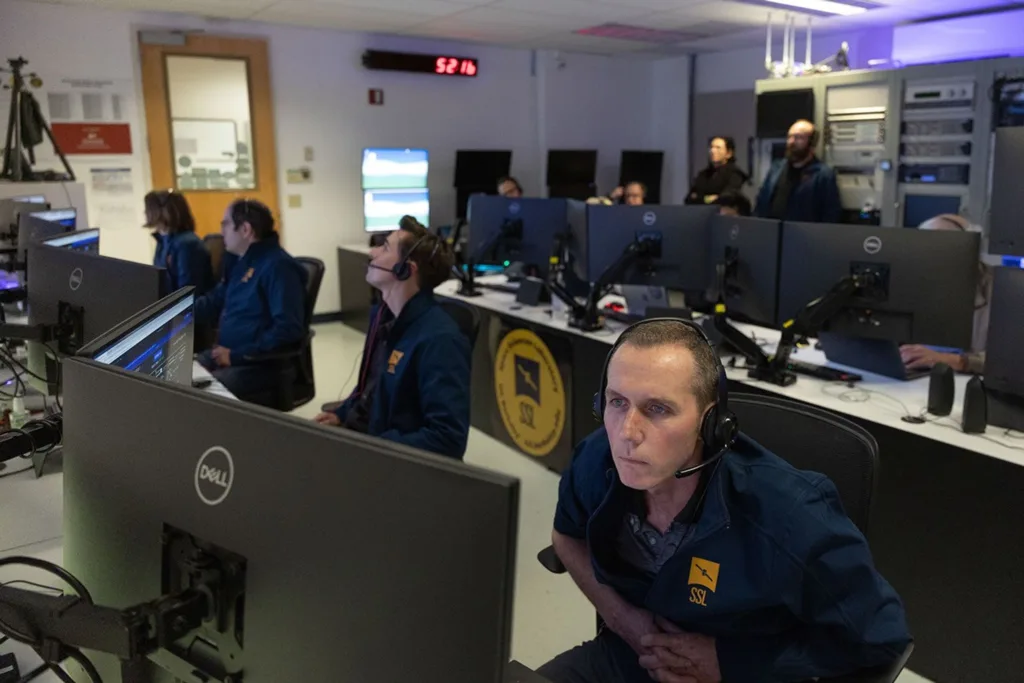
NASA has pushed two spacecraft past Earth on a first-of-its-kind trajectory toward Mars. The twin ESCAPADE probes completed powered gravity assists, combining planetary pull with engine burns to slingshot away from home. Most Mars missions require strict two-year launch windows when planets align directly. This maneuver bypasses that constraint by looping the probes through a gravitational balancing point a million miles out before returning for the boost.
That design allows missions to launch almost anytime, offering a new flexibility for interplanetary travel. The first probe made its close approach about 1,000 miles above the surface, while the second followed two days later at roughly 650 miles high. Each craft executed a nine-minute engine firing during its pass to lock in the trajectory.
Our read: this marks a shift from rigid planetary alignment windows toward flexible, on-demand interplanetary mission design. Both probes are now on a ten-month cruise toward the Red Planet, targeting orbit arrival in September 2027. Once they arrive, the twin orbiters will study how the solar wind strips away the Martian atmosphere.
Watch for how this trajectory strategy shapes future low-cost planetary exploration.
The story so far
Earlier coverage connected by shared names and topics. Follow the dates to see how coverage developed; these links do not imply every article describes the same event.
 NASA Simulated Mars Crew Emerges After More Than a Year Inside Habitat
Four people spent more than a year locked away from Earth, managing the exact kind of isolation and communication delays real astronauts…
Connected by: EarthEARLIER COVERAGE- NASA Opens Applications for Next Generation of Moon and Mars Explorers
America is opening the door for its next wave of spacefarers. NASA has officially started accepting applications for its upcoming astronaut candidate…
Connected by: EarthEARLIER COVERAGE - 378 Days Without Windows: Inside NASA's Longest Mars Simulation
Four volunteers spent 378 days inside a windowless, 1,700-square-foot habitat in Houston without real-time communication, completing NASA's second long-duration Mars simulation on…
Connected by: NASAEARLIER COVERAGE - NASA Commits Billions to Build a Moon Base Before Astronauts Return
NASA wants a working moon base for astronauts by 2032, and it is spending billions to build the logistics before anyone lands.…
Connected by: NASAEARLIER COVERAGE - NOWNASA’s Twin ESCAPADE Spacecraft Clear Powered Earth Flybys on Route to MarsCURRENT UPDATE



Original publication: 9 November 2026 21:31