NASA’s Thanksgiving Tribute: Volunteers Power Space and Earth Science
When NASA says thank you, it’s because volunteers are the unseen engine behind its discoveries. These citizen scientists gather data, write code, and even design projects, turning raw observations into publishable science.
When NASA says thank you, it’s because volunteers are the unseen engine behind its discoveries. These citizen scientists gather data, write code, and even design projects, turning raw observations into publishable science. Yet their work often goes unnoticed, buried behind headlines about rockets and telescopes. This Thanksgiving, NASA shines a spotlight on the people whose hands make the science happen.
Chihoko Cullens, principal investigator of Space Cloud Watch, praised three volunteers for their nightly cloud photography. Pirjo Koski’s images feed a Dutch cloud database, while Huub Eggen’s detailed notes help refine models. Brian Scott’s time‑lapse videos and the trio’s field guide now train new citizen scientists to identify noctilucent clouds.
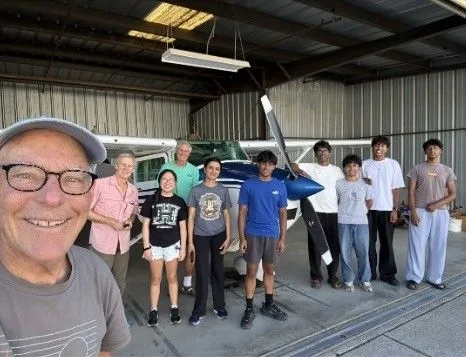
Their contributions illustrate how volunteer data can become a foundational tool for the entire research community. Ryan Scott highlighted a cohort of high‑school students who turned NASA’s free Machine Learning for Space Biology course into a research team. They mined retinal data from the ISS Rodent Research‑9 mission, training a machine‑learning ensemble that distinguishes oxidative damage from cell death.
The resulting paper, published in npj Microgravity, lists every student as a co‑author, and several have already begun college with a NASA publication.
This example shows that citizen science can produce peer‑reviewed research and launch careers, even for teenagers.
Snapshot Wisconsin’s coordinator Kyra Shaw thanked long‑time volunteer Tim Sparks for nearly a decade of dedication.
Sparks helped pilot test protocols and now maintains extra equipment that records snow depth, temperature, and sound at a trail camera site.
His work underpins the new Snapshot Phenology Project, a key component of Wisconsin’s wildlife monitoring program.
The project’s success demonstrates how a single volunteer’s commitment can elevate an entire citizen‑science initiative.
From cloud‑watching to machine learning, from lunar imaging to watershed monitoring, NASA’s volunteers are driving discoveries across the solar system and our planet.
Their stories prove that anyone can contribute to real science, whether by posting a photo, writing code, or mentoring students.
NASA invites anyone with curiosity to join its open opportunities, where volunteer work can lead to published papers and new tools.
This Thanksgiving, we ask you to consider stepping into the field—your data could be the next breakthrough.
The story so far
Earlier coverage connected by shared names and topics. Follow the dates to see how coverage developed; these links do not imply every article describes the same event.
 NASA Offers $500,000 to Build the Next Generation of Space Thrusters
NASA is turning to private industry to build the propulsion systems that could power future space exploration. The agency launched the Advanced…
Connected by: SpaceEARLIER COVERAGE- Voyager 1 Reaches One Light-Day Out After Nearly 50 Years in Space
A radio message sent to Voyager 1 now requires a full 24 hours to reach the spacecraft. NASA states that the interstellar…
Connected by: SpaceEARLIER COVERAGE - SpaceX Dragon Departs ISS with 6,300 lbs of Science, Including 3D‑Bioprinted Blood Vessels
A SpaceX Dragon spacecraft is about to leave the International Space Station, carrying more than 6,300 pounds of science that could change…
Connected by: SpaceEARLIER COVERAGE - Voyager 1 Reaches One Light-Day From Earth
A command sent to NASA's most distant spacecraft now requires a 24-hour journey just to arrive. Voyager 1 has reached a distance…
Connected by: EarthEARLIER COVERAGE - NOWNASA’s Thanksgiving Tribute: Volunteers Power Space and Earth ScienceCURRENT UPDATE
Original publication: 18 November 2026 23:02