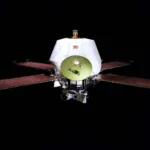
NASA launched the Cassini spacecraft on a seven-year voyage to Saturn on October 15, 1997.
NASA launched the Cassini spacecraft toward Saturn on October 15, 1997, beginning a flagship planetary mission that spanned two decades. The $3.26 billion spacecraft lifted off aboard a Titan 4B rocket from Cape Canaveral Air Force Station in Florida, according to historical archives.

NASA launched the Cassini spacecraft toward Saturn on October 15, 1997, beginning a flagship planetary mission that spanned two decades. The $3.26 billion spacecraft lifted off aboard a Titan 4B rocket from Cape Canaveral Air Force Station in Florida, according to historical archives. It took nearly seven years for Cassini to reach the ringed planet, entering orbit in 2004 as the first probe to do so.
The mission included the European Space Agency's Huygens lander, which successfully touched down on Saturn's moon Titan in 2005. Over 13 years of close-up study, Cassini revealed dynamic rings, liquid hydrocarbon features on Titan, a hexagonal jetstream at Saturn's north pole, and icy water plumes erupting from the moon Enceladus.
NASA ultimately ended the mission on September 15, 2017, by steering the fuel-depleted spacecraft into Saturn's atmosphere to burn up. Space agency officials stated this deliberate destruction protected pristine moons like Enceladus and Titan from accidental biological contamination.
The story so far
Earlier coverage connected by shared names and topics. Follow the dates to see how coverage developed; these links do not imply every article describes the same event.
 NASA Highlights Saturn Opposition and Orionid Meteor Shower in October 2026 Skywatching Guide
NASA released its October 2026 skywatching guide, featuring Saturn at opposition, the Orionid meteor shower, and a lunar pass near the Pleiades…
Connected by: OctoberEARLIER COVERAGE- NASA opens applications for new flight directors to oversee Artemis and International Space Station missions through October 12
The space agency NASA is accepting applications for flight directors at the Johnson Space Center in Houston, Texas, through Monday, October 12.…
Connected by: OctoberEARLIER COVERAGE - SpaceX Falcon 9 Launches NASA CRS-35 Cargo Mission to the International Space Station on October 13
A SpaceX Falcon 9 rocket successfully launched on October 13, 2026, carrying the uncrewed Dragon spacecraft on NASA’s 35th commercial resupply services…
Connected by: CanaveralEARLIER COVERAGE - NASA Upgrades International Space Station Power Supply With Next-Generation Roll-Out Solar Arrays
Over the past five years, NASA has upgraded the International Space Station’s power system by installing next-generation roll-out solar arrays. These compact…
Connected by: StationEARLIER COVERAGE - NOWNASA launched the Cassini spacecraft on a seven-year voyage to Saturn on October 15, 1997.CURRENT UPDATE




Original publication: 16 October 2026 00:43