How a blinding dust storm helped Mariner 9 rewrite the Martian map
When NASA sent Mariner 9 toward Mars in 1971, scientists expected another boring lunar twin. Earlier flybys showed a heavily cratered surface, convincing researchers the Red Planet was just a bigger moon.
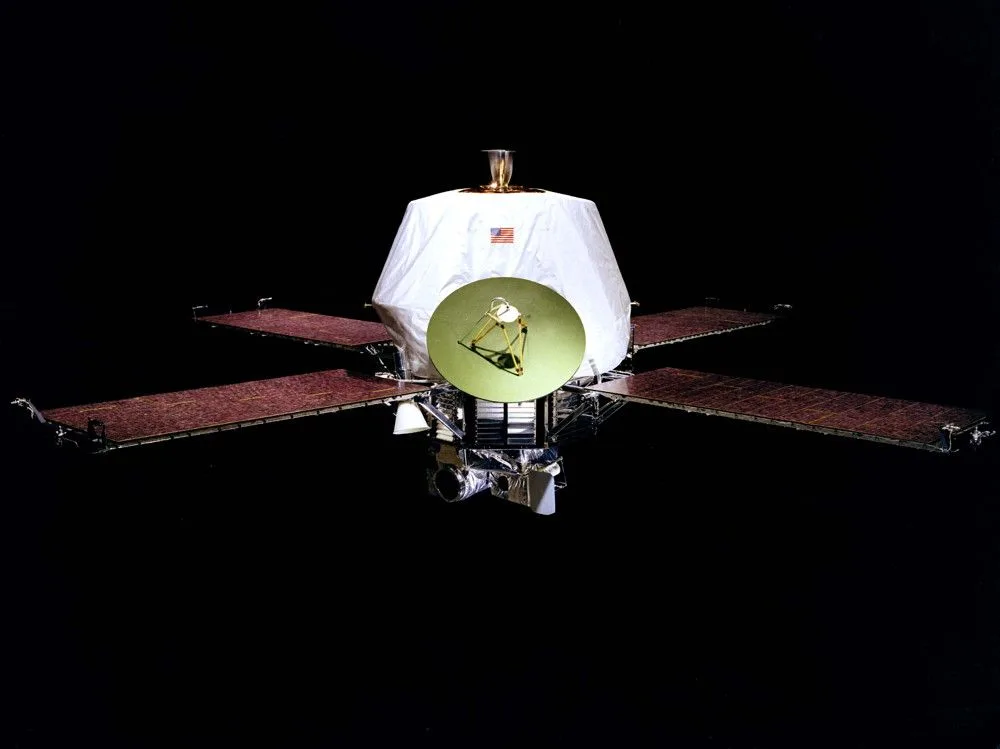
When NASA sent Mariner 9 toward Mars in 1971, scientists expected another boring lunar twin. Earlier flybys showed a heavily cratered surface, convincing researchers the Red Planet was just a bigger moon. That assumption died the moment the spacecraft arrived. A massive global dust storm shrouded the entire planet, hiding everything from view.
Yet that blinding weather delivered an unexpected breakthrough. Tall structures poked straight through the haze, forcing scientists to rethink what they were looking at. Those mysterious peaks turned out to be the summits of massive volcanoes, led by Olympus Mons, the tallest volcano in the solar system. Our read suggests that bad weather actually saved the mission from recording a routine cratered world, turning an atmospheric obstacle into a geological revelation.
Once the dust finally settled, cameras mapped eighty-five percent of the planet over a single year in orbit. The probe even beat the Soviet Union's Mars 2 craft to the planet, securing a historic first despite launching later according to NASA mission records. That mapping campaign revealed Valles Marineris, an enormous canyon stretching twenty-five hundred miles across the surface.
That span makes the chasm five times longer than Arizona's Grand Canyon.
By February 1972, the gaseous nitrogen feeding the attitude control thrusters ran dry, forcing a final shutdown later that year.
The hardware is dead, but it left behind a detailed planetary portrait built entirely out of a lucky weather delay.
The story so far
Earlier coverage connected by shared names and topics. Follow the dates to see how coverage developed; these links do not imply every article describes the same event.
 The Silent Drift of Mars 1
On a November day in 1962, the Soviet Union launched the Mars 1 spacecraft toward the Red Planet, hoping to pull off…
Connected by: Red PlanetEARLIER COVERAGE- How a Decades-Long Silence Ended NASA's Most Reliable Mars Pioneer
When NASA launched the Mars Global Surveyor on November 7, 1996, it broke a dry spell that had lasted nearly twenty years.…
Connected by: Red PlanetEARLIER COVERAGE - NASA’s Twin ESCAPADE Spacecraft Clear Powered Earth Flybys on Route to Mars
NASA has pushed two spacecraft past Earth on a first-of-its-kind trajectory toward Mars. The twin ESCAPADE probes completed powered gravity assists, combining…
Connected by: NASAEARLIER COVERAGE - NASA Hits Reset on Mars Sample Return to Escape an 11 Billion Dollar Trap
NASA is taking another swing at bringing Martian dirt and rock back to Earth after previous price tags spun out of control.…
Connected by: MartianEARLIER COVERAGE - NOWHow a blinding dust storm helped Mariner 9 rewrite the Martian mapCURRENT UPDATE



Original publication: 14 November 2026 02:55