Japan launches the Martian Moons eXploration mission aboard an H3 rocket to study Phobos and Deimos.
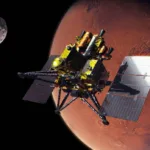
Japan is launching its Martian Moons eXploration mission to study the Red Planet's two small moons, Phobos and Deimos. The spacecraft is scheduled to lift off aboard an H3 rocket from the Tanegashima Space Center.

Japan is launching its Martian Moons eXploration mission to study the Red Planet's two small moons, Phobos and Deimos. The spacecraft is scheduled to lift off aboard an H3 rocket from the Tanegashima Space Center. The mission aims to resolve a mystery regarding the origin of Phobos and Deimos.
According to NASA program scientist Tom Statler, the moons might be debris from a massive impact on Mars or ancient captured asteroids. NASA is a partner on the mission, providing scientific instruments, a technology demonstration, communication support, and funding for U.S. scientists. If the schedule holds, the spacecraft will reach the Mars system in August 2027 and enter orbit around Phobos a month later.
It will study both moons from a distance for about 18 months before deploying a French-German rover named Idefix onto Phobos in early 2029. The main spacecraft plans to land on Phobos in 2030, collect at least 10 grams of samples, and return them to Earth in a capsule landing scheduled for 2031.
The mission was originally scheduled to launch in 2024 but was delayed by issues with the H3 rocket.
Because proper alignment between Earth and Mars occurs only once every 26 months, the project had
The story so far
Earlier coverage connected by shared names and topics. Follow the dates to see how coverage developed; these links do not imply every article describes the same event.
 NASA Briefing to Highlight Contributions to Martian Moons Mission
NASA will host a media teleconference to preview its contributions to the Japan Aerospace Exploration Agency’s Martian Moons Exploration mission. The spacecraft…
Connected by: Tom StatlerEARLIER COVERAGE- NASA Researchers Develop New Solid-State Batteries to Support Artemis Campaign on the Moon's South Pole
NASA researchers are developing new batteries designed to operate in the extreme temperatures of the Moon's South Pole. The project, named SPEARS,…
Connected by: CenterEARLIER COVERAGE - NASA Contributes Instruments and Support to Japan's Upcoming Martian Moons eXploration Mission
NASA is contributing key instruments, technology, and support to the Japan Aerospace Exploration Agency’s upcoming Martian Moons eXploration mission. The mission aims…
Connected by: Martian MoonsEARLIER COVERAGE - Japan's MMX mission prepares to launch a spacecraft to collect and return surface samples from Mars moon Phobos.
Japan is preparing to launch an ambitious spacecraft designed to become the first to return to Earth from Mars orbit, carrying pristine…
Connected by: TanegashimaEARLIER COVERAGE - NOWJapan launches the Martian Moons eXploration mission aboard an H3 rocket to study Phobos and Deimos.CURRENT UPDATE



Original publication: 19 October 2026 15:30