Vulcan Rocket Failure Shakes the US Launch Market
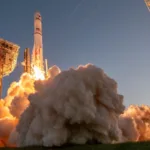
A roaring liftoff from Cape Canaveral ended in a fiery loss on Sunday, marking the first total mission failure in United Launch Alliance’s 20-year history.

A roaring liftoff from Cape Canaveral ended in a fiery loss on Sunday, marking the first total mission failure in United Launch Alliance’s 20-year history. The Vulcan rocket carrying 40 Amazon broadband satellites suffered an anomaly roughly 10 minutes into the flight, tumbling out of control before its upper stage could deploy the payload.
Telemetry data captured the twin methane-burning BE-4 main engines supplied by Blue Origin firing for at least 30 extra seconds, an overburn suggesting the booster stage struggled to maintain performance before the vehicle began to spin. Our read: this sudden grounding leaves major national security payloads and commercial mega-constellations with virtually nowhere else to turn except SpaceX.
Amazon now faces severe bottlenecks for its Leo network, which relies on 37 more booked Vulcan flights alongside delayed vehicles from Blue Origin and Europe's Ariane 6. While Amazon previously contracted with SpaceX for 10 Falcon 9 missions to bypass past delays, that workaround is closing as SpaceX transitions its fleet toward Starship.
The stakes extend directly to the Pentagon, where the US Space Force depends on ULA alongside SpaceX to launch sensitive national security payloads.
Past Vulcan delays already forced military officials to swap six missions over to Falcon rockets to keep pace with foreign rivals like China.
With Vulcan grounded indefinitely for a rigorous investigation, the military faces a deepening reliance on a single primary provider just as SpaceX prepares to phase out its workhorse Falcon line.
Downstream consequences could also hit NASA's Artemis lunar campaign if investigators trace Sunday's anomaly to the shared Blue Origin engine architecture or ULA's Centaur upper stage.
Blue Origin's New Glenn rocket uses a similar version of the BE-4 engine and must recover from a ground test explosion earlier this year to support backlogged lunar lander tests.
Without a swift return to flight for these competing launch providers, the entire architecture for US access to orbit narrows dangerously.
The story so far
Earlier coverage connected by shared names and topics. Follow the dates to see how coverage developed; these links do not imply every article describes the same event.
 SpaceX Preps Starship Flight 15 for First-Ever Full Orbital Rocket Recovery
SpaceX is attempting the first full recovery of an orbital rocket in history during its upcoming Starship Flight 15 mission. The 15th…
Connected by: RocketEARLIER COVERAGE- Rocket Lab Raises Neutron Launch Prices as Launch Bottleneck Looms
Rocket Lab just hiked the price of a Neutron rocket launch from $55 million to $70 million. That is a price jump…
Connected by: RocketEARLIER COVERAGE - ULA's Vulcan Centaur Returns to Flight Carrying Amazon Satellites
United Launch Alliance is returning its Vulcan Centaur rocket to flight after a nine-month pause, carrying forty internet satellites for Amazon Leo.…
Connected by: AllianceEARLIER COVERAGE - Rocket Lab’s 100th Launch: A Milestone Rocketed to Record Speed
Rocket Lab’s 100th launch is slated for Saturday morning, a milestone that will be broadcast live. The company says the 59‑foot Electron…
Connected by: RocketEARLIER COVERAGE - NOWVulcan Rocket Failure Shakes the US Launch MarketCURRENT UPDATE

Original publication: 16 November 2026 04:41