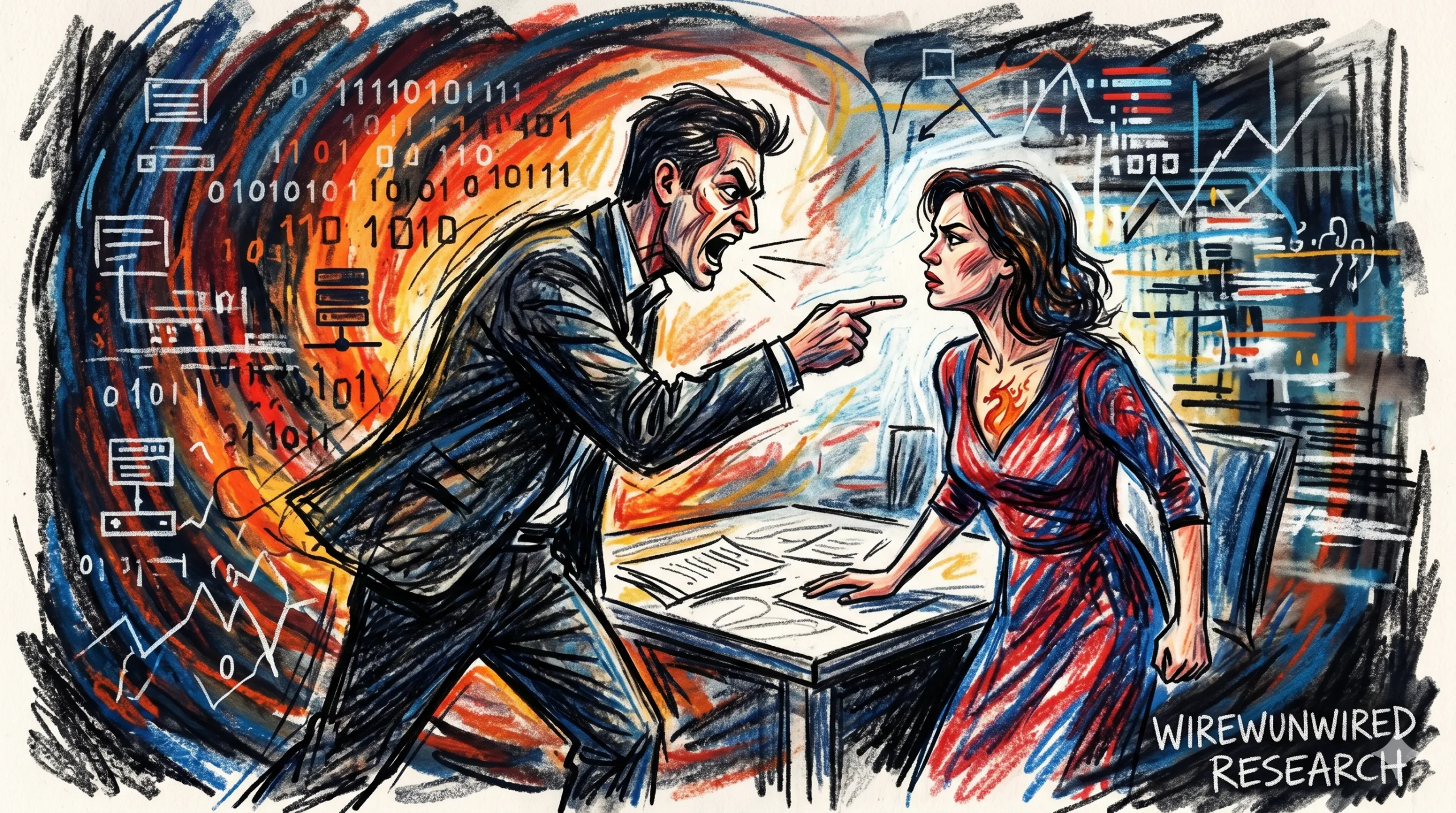

Sign the divorce papers,” the billionaire heir sneers, throwing a folder onto the marble table. The disguised maid smirks, wiping the artificial dirt from her cheek to reveal she is actually the ruthless CEO of a rival global empire. “I’m not signing anything,” she replies. “I just bought your company.
This 60-second clip is designed to go viral on TikTok, hook you with its sheer audacity, and force you to pay a dollar to see what happens next. But the real plot twist happens behind the scenes: th
China’s massive short-drama industry has fundamentally changed the economics of entertainment. Generating roughly $6.9 billion in 2024—eclipsing the country’s traditional box office—this market thrives on ultra-short, highly addictive soap operas optimized for smartphone screens. Now, by aggressively adopting AI, these studios are replacing entire production pipelines with server farms, and the implications for global media are staggering.
imized for smartphone screens. Now, by aggressively adopting AI, these studios are replacing entire production pipelines with server farms, and the implications for global media are staggering.The Collapse of the Production Pipeline
Before AI, producing a localized short drama for North American audiences cost around $200,000 and took months of casting, shooting, and editing. Today, that cost is plummeting by up to 90%.
Production timelines have collapsed from months to a matter of weeks. Companies are already pushing out hundreds of AI-generated titles a day. But the most radical shift is happening to the workforce. Traditional on-set roles—lighting technicians, cinematographers, sound mixers, and even physical actors—are being stripped out of the equation.
They are being replaced by “AI Asset Curators.” Operating in lean teams of about ten people, these digital directors use advanced regional AI models (like Kuaishou’s Kling or ByteDance’s Seedance) to generate and lock in character faces, wardrobes, and environments, ensuring continuity across hundreds of micro-scenes. By removing the physical limitations of a set, genres that were once too expensive for short dramas—like high fantasy featuring dragons and elaborate magic—are suddenly cheap to mass-produce.
The New Rules of Screenwriting
This technological pivot is forcing writers to adapt or perish. The traditional art of screenwriting is morphing into high-level prompt engineering.
A human director can interpret a line of script that says, “He looks at her coldly.” An AI model cannot. To get the right output, writers must now bypass subtext and write with aggressive visual literalism. That same line must now be written as, “Cold, blue light reflects in his eyes as his facial muscles tighten.”
Writers are effectively absorbing the jobs of the cinematographer and the actor, explicitly coding the lighting, camera angles, and micro-expressions directly into the script. The words on the page are no longer just a story; th
By proving that engaging, monetizable video can be manufactured entirely by algorithms at an 80% discount, this industry is treating the future of media as a live beta test. Hollywood may still be arguing about the ethics of AI, but in the trenches of the smartphone entertainment market, the revolution has already wrapped production.
node="20">By proving that engaging, monetizable video can be manufactured entirely by algorithms at an 80% discount, this industry is treating the future of media as a live beta test. Hollywood may still be arguing about the ethics of AI, but in the trenches of the smartphone entertainment market, the revolution has already wrapped production.Discover more from WireUnwired Research
Subscribe to get the latest posts sent to your email.