
Why November’s Supermoon Was Just the Opening Act
Skywatchers across the globe caught a glimpse of an oversized lunar disk on November 24 as the full Moon rose opposite the setting Sun.
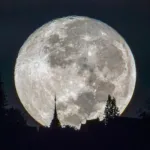
Skywatchers across the globe caught a glimpse of an oversized lunar disk on November 24 as the full Moon rose opposite the setting Sun. That brilliant twilight appearance happened because the lunar orbit is elliptical rather than circular, bringing the satellite to perigee at the exact time of its full phase.
Astronomers refer to this close-alignment coincidence as a supermoon, yielding a noticeably larger and brighter view above backyards and stone walls than a standard full cycle. Our read: this alignment turns ordinary evening horizons into a reliable four-month clock for casual observers. November’s sighting was not a standalone spectacle.
NASA notes this event marked the first in a series of four consecutive perigee full moons. That sequence means your next opportunity to watch a similar lunar rise arrives on December 23 with the appearance of the Cold Moon.
Sources & updates
AI-assisted brief based on the original reporting.
Original report: NASA — Recently Published
Source published: 27 Nov 2026, 10:35
Image credit: WireUnwired deterministic editorial visual
The story so far
Earlier coverage connected by shared names and topics. Follow the dates to see how coverage developed; these links do not imply every article describes the same event.
 Watch November's Beaver Supermoon Rise Online Today
November's final full moon rises today, bringing a rare chance to watch a supermoon through robotic telescopes without stepping into the cold.…
Connected by: SupermoonEARLIER COVERAGE- SpaceX Flies Fourth Military Mission in November as Flight Counts Surge
A single Falcon 9 rocket lifted off from California carrying an unknown payload for the U.S. Space Force, marking the fourth military…
Connected by: NovemberEARLIER COVERAGE - November’s Supermoon Sparked a Global Photography Sprint
November's full moon rose on Nov. 24, 2026, launching a series of four supermoons. These events happen when the natural satellite turns…
Connected by: SupermoonEARLIER COVERAGE - The 2026 Cold Moon Will Be the Closest and Brightest Supermoon of the Year
The December full moon will reach peak illumination at 8:28 p.m. EST on Dec. 23, 2026, positioning itself as the closest supermoon…
Connected by: SupermoonEARLIER COVERAGE - NOWWhy November’s Supermoon Was Just the Opening ActCURRENT UPDATE

Original publication: 27 November 2026 10:35