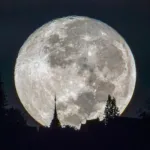
November’s Supermoon Sparked a Global Photography Sprint
November's full moon rose on Nov. 24, 2026, launching a series of four supermoons.
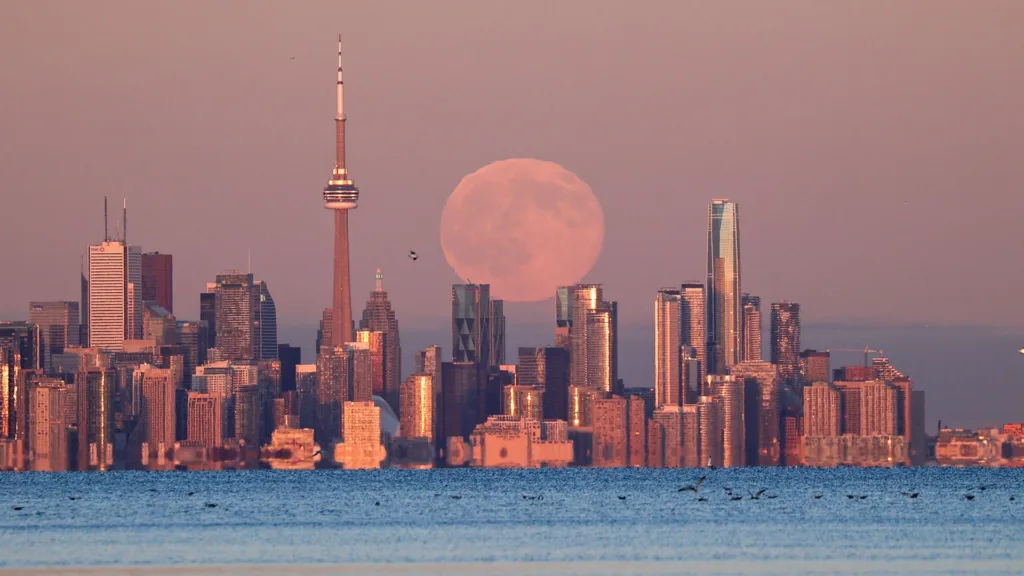
November's full moon rose on Nov. 24, 2026, launching a series of four supermoons. These events happen when the natural satellite turns full near its closest point to Earth in a 27-day elliptical orbit. That added proximity makes the lunar disk appear larger and brighter than smaller full moons. Photographers worldwide framed the glowing sphere against ancient temples, modern skylines, and city alleyways.
In Toronto, Mert Alper Dervis captured a flock of birds skimming past the lunar disk while atmospheric refraction warped its outline. This bending happens as reflected light passes through pockets of air with differing temperatures and densities. Other global observers used telephoto gear to frame the moon behind urban architecture or past passing aircraft, showcasing how perspective changes the familiar face of the night sky.
Our read: This widespread digital capture effort turns a routine astronomical alignment into a collective cultural event. Instead of just tracking data, skywatchers use local architecture to measure the visual scale of a cosmic neighbor. Astrophotographers have a short wait for the final encore. The next supermoon arrives on Dec.
23, passing 221,668 miles from Earth at maximum illumination.
The story so far
Earlier coverage connected by shared names and topics. Follow the dates to see how coverage developed; these links do not imply every article describes the same event.
 Mars and Jupiter Stage a Rare Night Sky Rendezvous This Weekend
Mars and Jupiter will drift just over one degree apart on the night of November 15 to 16. This close appearance, known…
Connected by: NovemberEARLIER COVERAGE- NASA’s Moon plan reshapes, but orbital refueling still a mystery
Starship’s mid‑air catch on November 14 cleared a major hurdle for NASA’s lunar ambitions, but the real question is how many refueling…
Connected by: NovemberEARLIER COVERAGE - NASA Wants a Lunar Nuclear Reactor by 2030 to Beat the Two-Week Night
Solar panels cannot survive a lunar night that lasts two weeks. To keep habitats and rovers running when the sun goes down,…
Connected by: EarthEARLIER COVERAGE - SpaceX Flies Fourth Military Mission in November as Flight Counts Surge
A single Falcon 9 rocket lifted off from California carrying an unknown payload for the U.S. Space Force, marking the fourth military…
Connected by: NovemberEARLIER COVERAGE - NOWNovember’s Supermoon Sparked a Global Photography SprintCURRENT UPDATE

Original publication: 25 November 2026 16:52