Historian Unearths Forgotten Details of the Voyager Golden Record as Spacecraft Crosses One Light-Day
Humanity's most distant spacecraft just passed a milestone at one light-day away from Earth. That vast separation has given space historians time to look backward as well as outward.

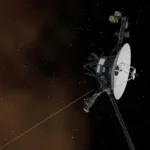
Humanity's most distant spacecraft just passed a milestone at one light-day away from Earth. That vast separation has given space historians time to look backward as well as outward. Former NASA historian Glen Swanson has spent years examining not just the message of the Voyager Golden Record, but the physical hardware itself.
While reviewing mission files, he confirmed a clever design feature meant to outlast the harsh realities of space. The iconic gold-plated copper record rests inside a protective cover inscribed with playback instructions and a map of our solar system. The designers knew that micrometeorites and space dust would eventually erode those exterior carvings over time.
To solve this catch-22, engineers hid a duplicate set of instructions on the inside of the cover. Blurry pre-launch photos hinted at the backup, but original blueprints finally proved it was there. Swanson also tracked down the rare physical duplicates manufactured shortly after launch. NASA originally produced a limited run of 10 extra sets alongside the two flight copies.
Today, those surviving duplicates reside in institutions like the Smithsonian, the Library of Congress, and various NASA field centers.
Our read: tracking down these terrestrial copies matters because the flight hardware is now drifting forever beyond our reach.
Watch for Swanson and Jon Lomberg's upcoming book and replica release in August 2027 to see more of these hidden details.
The story so far
Earlier coverage connected by shared names and topics. Follow the dates to see how coverage developed; these links do not imply every article describes the same event.
 Voyager 1 Crosses the One Light-Day Threshold After Nearly 50 Years in Space
A radio signal sent from Earth now needs a full 24 hours to reach NASA's Voyager 1. Launched in 1977, the spacecraft…
Connected by: Light-DayEARLIER COVERAGE- NASA Invites Earth to Shine a Light for Voyager 1’s One‑Light‑Day Milestone
NASA is asking people worldwide to light up the night sky as Voyager 1 approaches a historic distance from Earth. The probe…
Connected by: VoyagerEARLIER COVERAGE - Voyager 1’s Light‑Day Milestone: Why It’s a Decade Ahead of Its Twin
Voyager 1 will soon be a full light‑day from Earth, meaning a signal will take 24 hours to return. At 16 billion miles (25 billion km)…
Connected by: VoyagerEARLIER COVERAGE - Voyager 1 Reaches One Light-Day From Earth
A command sent to NASA's most distant spacecraft now requires a 24-hour journey just to arrive. Voyager 1 has reached a distance…
Connected by: Light-DayEARLIER COVERAGE - NOWHistorian Unearths Forgotten Details of the Voyager Golden Record as Spacecraft Crosses One Light-DayCURRENT UPDATE


Original publication: 18 November 2026 17:45