NASA Invites Earth to Shine a Light for Voyager 1’s One‑Light‑Day Milestone
NASA is asking people worldwide to light up the night sky as Voyager 1 approaches a historic distance from Earth. The probe will be one light‑day away on Nov.
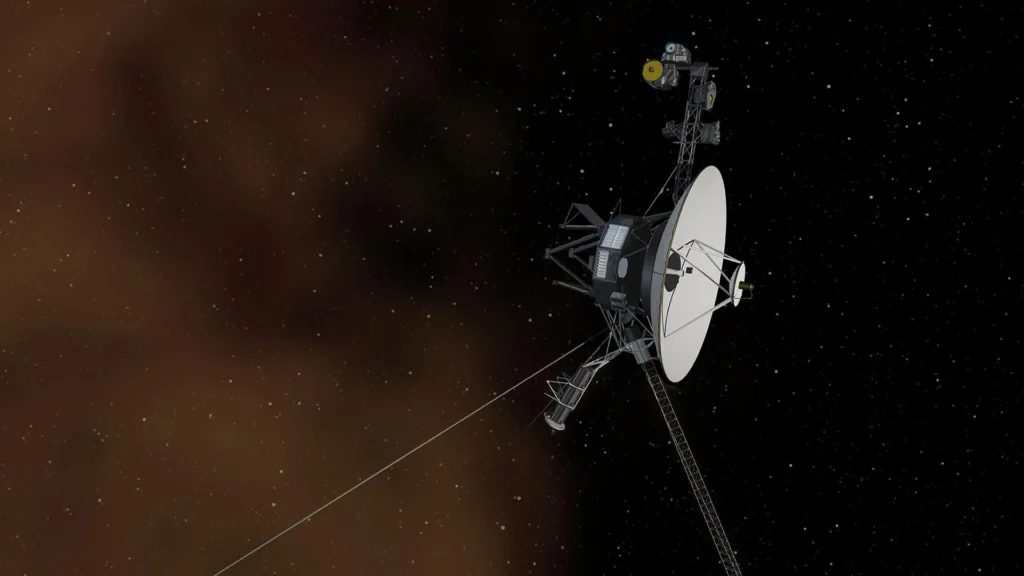
NASA is asking people worldwide to light up the night sky as Voyager 1 approaches a historic distance from Earth. The probe will be one light‑day away on Nov. 18, 2026—a span of about 16 billion miles (26 billion km) that light covers in a day. At that distance, even radio signals take roughly 24 hours to reach the spacecraft, making any Earth‑side flash impossible to communicate with it.
To mark the moment, NASA has launched a “Shine Bright for Voyager’s Light‑Day” event. Participants are encouraged to flash the mission’s three‑letter call sign, VGR, in Morse code for about a minute. The sequence—three quick flashes, one long for V; two long, one quick for G; one quick, one long, one quick for R—can be sent with a flashlight, phone, or bike light.
NASA even offers an automated flasher that runs in a browser to help people generate the pattern. The gesture is purely symbolic. While the light will create a visible wave of golden flashes across the planet, it will never reach Voyager 1. The probe is still monitored by NASA’s Deep Space Network, which uses large radio dishes to send and receive data that travels at light speed.
The event therefore celebrates the probe’s journey rather than attempting to communicate.
Beyond the flash, NASA will host a moderated discussion on Nov.
19 with Voyager team members and leadership.
The session will cover the spacecrafts’ current status, the science they continue to gather in interstellar space, and the engineering challenges of keeping a nearly 50‑year‑old probe operational.
A preview of a 2027 Voyager documentary will also be shown.
Our read: the “Shine Bright” campaign highlights how far human ingenuity has taken us and the limits of our reach.
It reminds us that, even after five decades, we still rely on radio waves to talk to a probe that is a day’s light away.
Watching the global flash will be a tangible reminder of the distance between us and the frontier we’ve sent out.
The story so far
Earlier coverage connected by shared names and topics. Follow the dates to see how coverage developed; these links do not imply every article describes the same event.
 Voyager Hits a Light-Day Out as November Skies Light Up
A human-made machine is now so far away that light takes a full day to reach it. This November, NASA notes that…
Connected by: VoyagerEARLIER COVERAGE- NASA's Escapade Twins Pull Off a First-Ever Mars Gravity Slingshot
When rocket delays wrecked NASA's carefully timed plans, mission planners traded a standard planetary alignment for a risky orbital detour. That choice…
Connected by: EarthEARLIER COVERAGE - Voyager 1 Crosses the One Light-Day Threshold After Nearly 50 Years in Space
A radio signal sent from Earth now needs a full 24 hours to reach NASA's Voyager 1. Launched in 1977, the spacecraft…
Connected by: InvitesEARLIER COVERAGE - Voyager 1 Reaches One Light-Day Out After Nearly 50 Years in Space
A radio message sent to Voyager 1 now requires a full 24 hours to reach the spacecraft. NASA states that the interstellar…
Connected by: VoyagerEARLIER COVERAGE - NOWNASA Invites Earth to Shine a Light for Voyager 1’s One‑Light‑Day MilestoneCURRENT UPDATE




Original publication: 17 November 2026 22:30