Uzbekistan Becomes the 37th Signatory to the International Artemis Accords for Civil Space Exploration
The Republic of Uzbekistan has officially joined the international coalition governing civil space exploration. During a ceremony in Samarkand on Monday, the nation became the 37th signatory to the Artemis Accords.

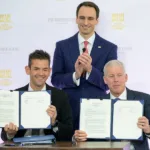
The Republic of Uzbekistan has officially joined the international coalition governing civil space exploration. During a ceremony in Samarkand on Monday, the nation became the 37th signatory to the Artemis Accords. Minister of Foreign Affairs Bakhtiyor Saidov signed the agreement on behalf of Uzbekistan during a visit by U.S.
Secretary of State Marco Rubio. NASA Deputy Administrator Matt Anderson noted the country's admission comes as the United States works to build a Moon base and establish an enduring lunar presence. The accords establish practical principles for safe, transparent, and responsible exploration. Signatories commit to exploring peaceably, sharing scientific data, rendering emergency aid, and preserving historic space sites.
The framework was originally launched in 2020 by NASA, the State Department, and seven founding nations. Uzbekistan has been expanding its national space program and developing its industry through international forums. Local students are currently working to launch the nation's first CubeSat—a small satellite technology demonstration—by 2028. The country is also scheduled to host the International Astronautical Congress that same year.
The story so far
Earlier coverage connected by shared names and topics. Follow the dates to see how coverage developed; these links do not imply every article describes the same event.
 NASA and Energy Department Sign Agreement to Advance Space Nuclear Power and Propulsion Systems
NASA and the U.S. Department of Energy have signed a memorandum of understanding to advance next-generation space nuclear power and propulsion. The…
Connected by: U.S. SecretaryEARLIER COVERAGE- SpaceX Falcon 9 Launches NASA CRS-35 Cargo Mission to the International Space Station on October 13
A SpaceX Falcon 9 rocket successfully launched on October 13, 2026, carrying the uncrewed Dragon spacecraft on NASA’s 35th commercial resupply services…
Connected by: InternationalEARLIER COVERAGE - NASA Upgrades International Space Station Power Supply With Next-Generation Roll-Out Solar Arrays
Over the past five years, NASA has upgraded the International Space Station’s power system by installing next-generation roll-out solar arrays. These compact…
Connected by: InternationalEARLIER COVERAGE - NASA Simulated Mars Crew Marks One Year Inside Habitat at Johnson Space Center in Houston
Four volunteers in a simulated Mars mission have marked one full year living inside an isolated habitat at NASA’s Johnson Space Center…
Connected by: ExplorationEARLIER COVERAGE - NOWUzbekistan Becomes the 37th Signatory to the International Artemis Accords for Civil Space ExplorationCURRENT UPDATE



Original publication: 20 October 2026 19:51