The Black Knight Myth: How a Lost Thermal Blanket Became an Alien Legend
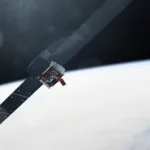
In December 1998, astronauts on the Space Shuttle Endeavour snapped a photo of a dark, oddly shaped object drifting past the International Space Station.

In December 1998, astronauts on the Space Shuttle Endeavour snapped a photo of a dark, oddly shaped object drifting past the International Space Station. The image was later identified as a thermal blanket that had slipped off a trunnion pin during the STS‑88 mission. Yet the photo has become the most famous evidence cited by believers in the Black Knight satellite, an alleged ancient alien craft orbiting Earth.
The NASA explanation is straightforward: the cover was a routine piece of equipment, and Mission Commander Bob Cabana even joked that it had “gotten away.” Astronaut Jerry Ross, frustrated, took the photo. When asked years later, Ross said he never imagined the cover was anything other than a lost blanket.
The fact that a mundane object was misread as extraterrestrial shows how quickly a single image can fuel a conspiracy when the public’s imagination is primed. The myth’s roots stretch back further. In the 1890s, Nikola Tesla detected odd radio signals at his Colorado Springs lab and wondered if they might be alien communications, though he never linked them to an orbiting object.
In 1954, author Donald Keyhoe claimed the U.S.
Air Force had spotted two unidentified satellites, only for officials to later identify them as meteors 400‑600 miles up.
A 1960 Time article reported a Navy sighting of a dark object that turned out to be debris from the Discoverer 8 spy satellite.
In 1963, NASA’s Gordon Cooper described “John’s fireflies” that were later explained as ice shards reflecting sunlight.
The 1973 theory of a 13,000‑year‑old probe by Scottish writer Duncan Lunan added a dramatic twist.
Lunan suggested a Bracewell probe from the star Epsilon Boötis could have arrived in Earth’s vicinity 13,000 years ago, a claim he later retracted but which fed the narrative of an ancient, alien satellite.
Our read: the Black Knight story is a textbook example of how disconnected events—Tesla’s signals, Keyhoe’s reports, misidentified debris, and a 1970s speculative paper—can be woven into a single, compelling narrative.
Each piece is true in isolation, but the connections are fabricated.
The consequence is a persistent legend that thrives on the public’s fascination with UFOs and distrust of government secrecy.
Landing: The myth will likely endure as long as people enjoy a good mystery.
When new images or data surface, the key is to check the source, compare it to known explanations, and remember that a single misinterpreted photograph can spark a centuries‑old conspiracy.
Keep an eye on how future space missions are reported, and ask whether the evidence truly supports the extraordinary claim or simply feeds an old story.
The story so far
Earlier coverage connected by shared names and topics. Follow the dates to see how coverage developed; these links do not imply every article describes the same event.
 A European Space Agency Satellite Just Played Doom in Orbit
A tiny satellite in low-Earth orbit recently fired up a 1993 first-person shooter entirely by voice command. Playing video games was never…
Connected by: EarthEARLIER COVERAGE- Italian Radio Enthusiasts Heard an SOS From Space in 1960—Did a Soviet Cosmonaut Go Missing?
In late November 1960, two Italian radio hobbyists, Achille and Gian Battista Judica‑Cordiglia, reported hearing a faint Morse‑code SOS drifting away from…
Connected by: EarthEARLIER COVERAGE - When the 'Ferrari of Space' Ran Out of Gas
In 2013, a sleek satellite known as the Ferrari of space ran out of gas and fell back to Earth. Europe's Gravity…
Connected by: InternationalEARLIER COVERAGE - Voyager 1 Reaches One Light-Day Out After Nearly 50 Years in Space
A radio message sent to Voyager 1 now requires a full 24 hours to reach the spacecraft. NASA states that the interstellar…
Connected by: EarthEARLIER COVERAGE - NOWThe Black Knight Myth: How a Lost Thermal Blanket Became an Alien LegendCURRENT UPDATE


Original publication: 16 November 2026 21:30