AI Ate Theoretical Physics' Homework. Now Comes the Hard Part.
Frontier artificial intelligence models are solving complex calculations faster than elite human researchers can write them up.

Frontier artificial intelligence models are solving complex calculations faster than elite human researchers can write them up. When theoretical physicist Suvrat Raju tested top models on unpublished problems that normally take human experts a full day to complete, leading systems scored near 90 percent accuracy. Our read: when machines can breeze through the rote math that defines early-career physics talent, the traditional ladder for discovering and training young scientists breaks down entirely.
This computational leap is already reshaping daily academic workflows across major universities. Physicists are running autonomous agents around the clock to grind through tedious equations, check old research for subtle errors, and search literature. This surge in automated grunt work has triggered a massive anomaly in publishing pipelines.
Submissions to the high-energy physics theory repository on arXiv jumped 30 percent over a ten-month stretch, completely eclipsing historical annual growth rates that rarely cracked 8 percent. Yet this flood of machine-assisted output creates an impossible digestive problem for human reviewers. As computer scientist Scott Aaronson noted, nobody has time to read an endless buffet of papers, even if the underlying science is solid.
Established leaders like Juan Maldacena remain optimistic that the field will adapt to the volume.
But the rapid automation of mechanical problem-solving threatens the apprenticeship model that turns students into independent thinkers.
If AI handles the calculation, graduate students risk losing the conceptual intuition built by grinding through hard math by hand.
Some senior faculty are already pausing PhD admissions to figure out what a human physicist's future actually looks like.
That professional uncertainty collides with broader funding cuts that make an already tenuous career path even riskier.
If mathematics is any indicator, physics may only be months away from AI-driven breakthroughs that bypass human calculation altogether.
Whether the field stops to think about grander conceptual problems or simply drowns in generated noise depends entirely on how physicists adapt to a machine that calculates faster than they can sleep.
The story so far
Earlier coverage connected by shared names and topics. Follow the dates to see how coverage developed; these links do not imply every article describes the same event.
 An AI Just Solved an 18-Year-Old Quantum Physics Problem
A recent MIT graduate just used an early AI model to close the book on an 18-year-old quantum computing puzzle. David Turturean…
Connected by: PhysicsEARLIER COVERAGE- How a Glitched Spacecraft Pulled Off History's First Asteroid Liftoff
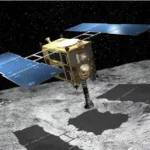
A crippled spacecraft achieved the impossible on November 19, 2005, by executing the first-ever liftoff from an asteroid. Japan's Hayabusa probe was…
Connected by: PhysicsEARLIER COVERAGE - NOWAI Ate Theoretical Physics' Homework. Now Comes the Hard Part.CURRENT UPDATE
Original publication: 25 November 2026 17:30