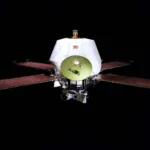
NASA’s SR-1 Freedom Advances with Progress on Nuclear Power Module
NASA and its partners have agreed to key contract actions to advance the Space Reactor-1 Freedom mission, humanity's first fission-powered spacecraft to operate beyond Earth's orbit.

NASA and its partners have agreed to key contract actions to advance the Space Reactor-1 Freedom mission, humanity's first fission-powered spacecraft to operate beyond Earth's orbit. Slated to launch in late 2028, the spacecraft will demonstrate nuclear electric propulsion in deep space while carrying a science payload known as SkyFall.
Sierra Lobo Inc. will build the nuclear power module’s closed Brayton cycle power conversion system, which turns reactor heat into electricity. This hardware development occurs under an existing contract supporting NASA’s Glenn Research Center. Meanwhile, the Department of Energy’s Idaho National Laboratory is designing and developing the fission reactor itself.
The spacecraft relies on nuclear fission—splitting atoms to generate heat—to power its systems and electric propulsion. Program director Steve Sinacore stated that the recent contract actions reduce technical risk and maintain momentum for the 2028 target. NASA and the DOE apply strict safety standards, ensuring the reactor remains inactive until the craft safely leaves Earth orbit.
Upon arrival, the SkyFall mission will deploy three Mars helicopters based on the Ingenuity design to gather scientific data and locate potential water sources.
The technology is also expected to support future systems, including power generation for NASA's Moon Base during prolonged periods of
The story so far
Earlier coverage connected by shared names and topics. Follow the dates to see how coverage developed; these links do not imply every article describes the same event.
 NASA and Energy Department Sign Agreement to Advance Space Nuclear Power and Propulsion Systems
NASA and the U.S. Department of Energy have signed a memorandum of understanding to advance next-generation space nuclear power and propulsion. The…
Connected by: Space Reactor-1 FreedomEARLIER COVERAGE- NASA Researchers Develop New Solid-State Batteries to Support Artemis Campaign on the Moon's South Pole
NASA researchers are developing new batteries designed to operate in the extreme temperatures of the Moon's South Pole. The project, named SPEARS,…
Connected by: CenterEARLIER COVERAGE - NASA Upgrades International Space Station Power Supply With Next-Generation Roll-Out Solar Arrays
Over the past five years, NASA has upgraded the International Space Station’s power system by installing next-generation roll-out solar arrays. These compact…
Connected by: PowerEARLIER COVERAGE - NASA Outlines Progress on Artemis Moon Base Rovers Ahead of Scheduled 2027 and 2028 Launches
NASA has released a video update detailing the progress of commercial robotic and crewed rovers designed for future lunar exploration. These vehicles…
Connected by: MeanwhileEARLIER COVERAGE - NOWNASA’s SR-1 Freedom Advances with Progress on Nuclear Power ModuleCURRENT UPDATE




Original publication: 20 October 2026 23:41