Cygnus XL’s 11,000‑Pound Payload Could Forge New Earth‑Bound Medicines
When a spacecraft carries 11,000 pounds of science to orbit, it can rewrite medicine on Earth.
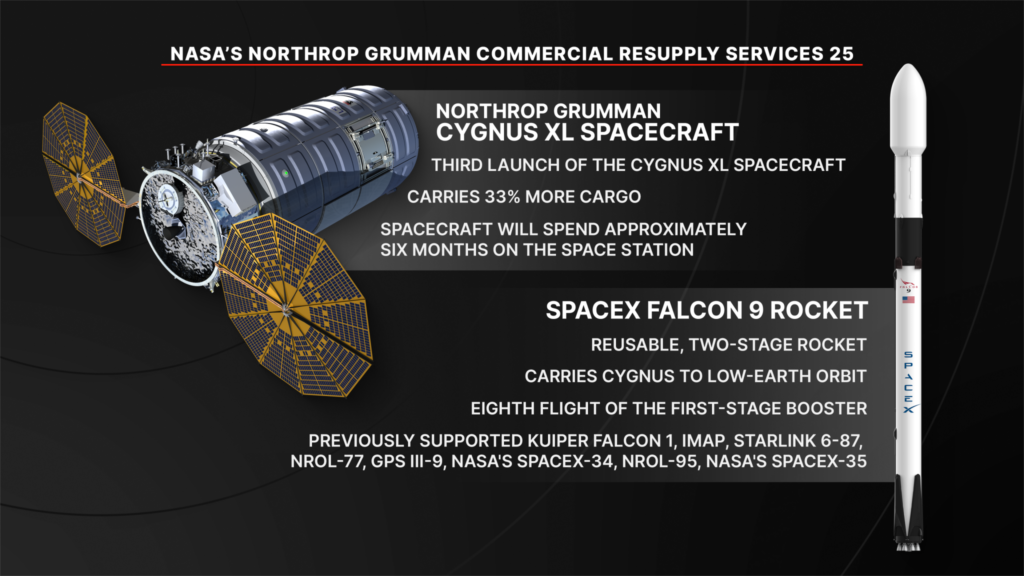
When a spacecraft carries 11,000 pounds of science to orbit, it can rewrite medicine on Earth. NASA’s CRS‑25 Cygnus XL, the third flight of the larger, solar‑powered version, will launch on a SpaceX Falcon 9 from Cape Canaveral and be captured by the Canadarm2 before docking to the Unity module.
The payload includes experiments that use microgravity to manufacture DNA‑inspired nanoparticles, test cancer‑cell movement, and grow engineered muscle tissue. The DNA Nano Therapeutics mission, for example, builds tiny particles that can deliver medicine into dense tissues such as cartilage and tumors. In microgravity, the particles assemble more uniformly than on Earth, potentially improving the precision of targeted treatments for cancer and osteoarthritis.
The same environment also lets researchers grow miniature tumor replicas to study metastasis, and test a radiation sensor that could protect future lunar crews. Beyond medicine, the mission carries a plant‑growth system that optimizes water use for future Mars missions and a robotic welding demo that could enable large structures to be assembled in space.
Each experiment turns the ISS into a testbed for technologies that may one day support long‑duration exploration.
Our read: NASA’s use of Cygnus XL to push in‑space manufacturing of nanomaterials signals a shift toward space‑born solutions that could accelerate drug development on Earth.
Watch how these experiments might change the way we treat disease and sustain life beyond our planet.
Sources & updates
AI-assisted brief based on the original reporting.
Original report: NASA — Recently Published
Source published: 25 Nov 2026, 00:39
Image credit: NASA — Recently Published
The story so far
Earlier coverage connected by shared names and topics. Follow the dates to see how coverage developed; these links do not imply every article describes the same event.
 Next Space Station Supply Run Targets Cancer Drugs and Muscle Loss Research
A Cygnus XL spacecraft will carry a heavy load of science investigations toward the International Space Station this month. NASA and Northrop…
Connected by: CanaveralEARLIER COVERAGE- Voyager 1 Crosses Light‑Day Milestone, Proving Human Ingenuity in Interstellar Space
At 2:16 a.m. PST on Nov. 18, 2026, Voyager 1 crossed a boundary no human‑made craft has crossed before: one light‑day from…
Connected by: EarthEARLIER COVERAGE - SpaceX Flies Secret Military Payload as Workhorse Rocket Nears Retirement
A Falcon 9 rocket lifted off from California late at night, carrying a classified payload for the U.S. Space Force. SpaceX ended…
Connected by: PayloadEARLIER COVERAGE - Northrop Grumman Secures $290 Million Contract for Next-Gen Weather Satellites
A single federal contract spans nearly two decades to overhaul how meteorologists track the atmosphere. NASA awarded Northrop Grumman Systems Corporation a…
Connected by: NorthropEARLIER COVERAGE - NOWCygnus XL’s 11,000‑Pound Payload Could Forge New Earth‑Bound MedicinesCURRENT UPDATE


Original publication: 25 November 2026 00:39