NASA Opens Call for 2025 Astronaut Class as Moon Mission Builds Momentum
NASA’s latest astronaut recruitment has already attracted 8,000 hopefuls, but only 10 will be chosen. The agency’s selection process is a rigorous filter that looks beyond academic credentials to assess technical skill, leadership, and resilience.

NASA’s latest astronaut recruitment has already attracted 8,000 hopefuls, but only 10 will be chosen. The agency’s selection process is a rigorous filter that looks beyond academic credentials to assess technical skill, leadership, and resilience. Those who make the cut will undergo nearly two years of intensive training that covers everything from spacewalks to lunar geology.
The stakes are high: the new class will be the backbone of missions that aim to return humans to the Moon and eventually send crews to Mars. The timing of the call aligns with NASA’s Artemis program, which is building a lunar base and preparing for the first crewed Mars mission.
Historically, the agency has selected 370 astronauts since the 1960s, and it currently has 32 active pilots and scientists. The new cohort will learn to operate high‑performance aircraft, conduct geological surveys, and manage complex systems in low‑gravity environments. Their training will be the bridge between Earth‑bound expertise and the demands of deep‑space exploration.
Our read: NASA’s emphasis on technical excellence, teamwork, and bravery signals a shift toward a more collaborative and risk‑aware culture.
The selection criteria require a U.S. citizenship, a master’s degree in a STEM field, and at least two years of related professional experience.
Candidates must also meet strict flight‑hour thresholds—750 hours in high‑performance jets, 1,500 in fixed‑wing aircraft, and 1,000 in rotorcraft.
Those who meet these standards will be poised to inspire the next generation of engineers and explorers.
Applications are open through the agency’s portal, and the final deadline is the end of December.
Prospective candidates must submit a complete packet that includes academic transcripts, flight logs, and medical clearance.
NASA’s medical exam ensures applicants can endure long‑duration spaceflight, while leadership assessments gauge teamwork and communication skills.
Those who succeed will join a training pipeline that starts with simulated missions and culminates in real lunar operations.
Watch for the final selection, slated for late 2027, when the chosen astronauts will begin their training.
The program’s success will hinge on the ability of these individuals to adapt to the harsh lunar environment and to lay the groundwork for Mars missions.
For anyone with a passion for science and a willingness to push boundaries, this is a once‑in‑a‑career chance to shape humanity’s future in space.
The next chapter of human exploration is waiting—will you be part of it?
The story so far
Earlier coverage connected by shared names and topics. Follow the dates to see how coverage developed; these links do not imply every article describes the same event.
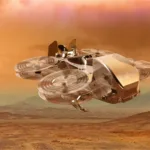
 Your Name Can Fly to Saturn's Moon Titan Aboard NASA's Dragonfly Rotorcraft
You will never soar above the organic sands or liquid methane lakes of Saturn’s largest moon, but your name can make the…
Connected by: MissionEARLIER COVERAGE- Jessica Watkins Makes History as First Black Woman to Command a Space Mission
When the Falcon 9 rocket roared on Oct. 1, the world watched a new kind of commander take the helm. Jessica Watkins,…
Connected by: MissionEARLIER COVERAGE - NASA Invites the Public to Ride Along on Its Nuclear Rotorcraft Bound for Saturn's Moon Titan
Humanity is still far from traveling to the outer edges of the solar system in person, but your name can make the…
Connected by: NASAEARLIER COVERAGE - NASA Opens Applications for Next Generation of Moon and Mars Explorers
America is opening the door for its next wave of spacefarers. NASA has officially started accepting applications for its upcoming astronaut candidate…
Connected by: AstronautEARLIER COVERAGE - NOWNASA Opens Call for 2025 Astronaut Class as Moon Mission Builds MomentumCURRENT UPDATE

Original publication: 10 November 2026 00:57