
NASA and Katalyst Space Gain Valuable Experience After Swift Observatory Boost Mission Fails to Raise Orbit
A commercial mission intended to boost NASA’s Neil Gehrels Swift Observatory concluded without raising the spacecraft’s orbit, but NASA and industry vendor Katalyst Space gained valuable experience for future in-space servicing programs.
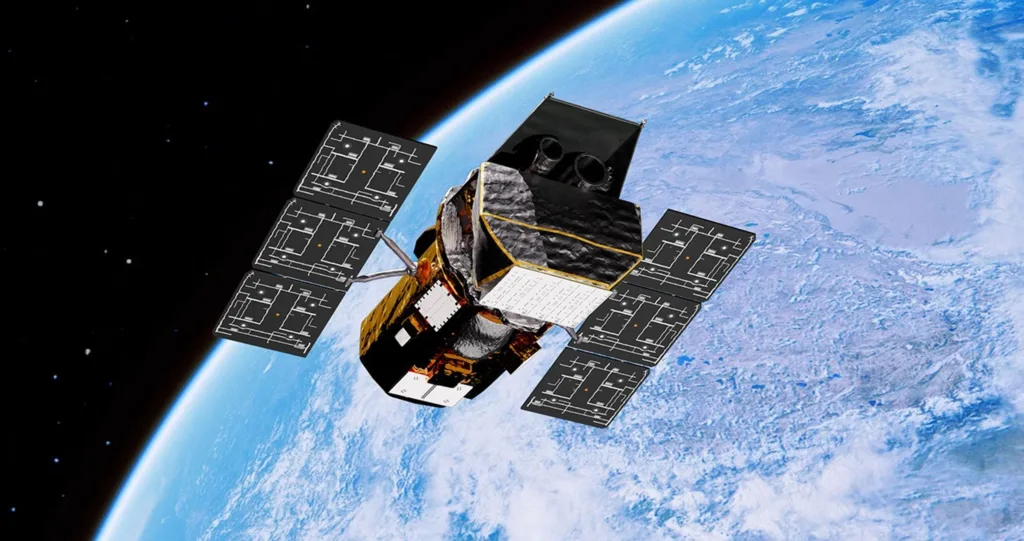
A commercial mission intended to boost NASA’s Neil Gehrels Swift Observatory concluded without raising the spacecraft’s orbit, but NASA and industry vendor Katalyst Space gained valuable experience for future in-space servicing programs. Launched in November 2004 to study gamma-ray bursts, Swift faced atmospheric drag that would cause it to re-enter the atmosphere by the end of 2026.
Following a compressed proposal process, NASA contracted Flagstaff, Arizona-based Katalyst in September 2025 to build a satellite to grab and lift Swift. Katalyst’s LINK robotic servicing spacecraft launched in July from Kwajalein Atoll on a Northrop Grumman Pegasus XL rocket. After reaching space, LINK experienced intermittent communications losses and orientation control issues, prompting NASA and Katalyst to scale back the mission on September 3 to focus on technology demonstrations using its xenon-powered propulsion system and three robotic arms.
LINK subsequently re-entered the atmosphere on September 25. Despite not achieving every objective, the accelerated public-private effort advanced U.S. spacecraft servicing technology and tested new operational methods, including atmospheric drag-reduction techniques developed by mission controllers at Penn State.
 NASA — Recently PublishedNASA, International Partners Advance Work on Space Crops
 NASA — Recently PublishedNASA Delegation to Highlight Moon and Mars Exploration at International Space Conference in Türkiye
 NASA — Recently PublishedNASA Opens Applications for Second Season of ORBIT Student Challenge With $500,000 in Prizes