Win a $419 Dwarflab Mini Smart Telescope—Space+ Members Enter Free
Space fans, your next telescope could be on the house. Space.com’s Community team has launched a free giveaway that lets U.S. residents enter for a chance to win one of two Dwarflab mini smart telescopes, each worth $419.

Space fans, your next telescope could be on the house. Space.com’s Community team has launched a free giveaway that lets U.S. residents enter for a chance to win one of two Dwarflab mini smart telescopes, each worth $419. The contest runs through Jan. 4, 2027, and the only requirement is a free Space+ club membership.
To enter, sign up for Space+ by entering your email on the contest page. If you’re already a member, simply use the email tied to your account. Two U.S. winners will be chosen, so each entry gives you a shot at a high‑end, portable telescope.
The prize is more than a pretty name. Dwarflab’s 30‑mm refractor is one of the most compact smart telescopes on the market, and Space.com reviewers say it’s an affordable entry point for stargazers who want to dip into astrophotography without breaking the bank. Beyond the telescope, Space+ unlocks badges for reading articles, space‑themed games, and quizzes that test your cosmic knowledge.
Winners will be announced in January 2027 on the contest page, so keep an eye out for the results and any future contests the community team may host.
The story so far
Earlier coverage connected by shared names and topics. Follow the dates to see how coverage developed; these links do not imply every article describes the same event.
 Could James Webb's Little Red Dots Be Big Bang Remnants?
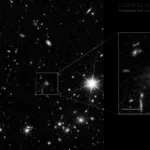
NASA's James Webb Space Telescope keeps finding compact cosmic objects that vanish before the universe reaches two billion years old. Researchers now…
Connected by: TelescopeEARLIER COVERAGE- Hubble’s Star‑Cluster Snapshot Suggests a Captured Ancient Relic
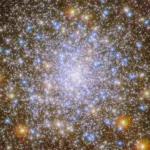
Hubble’s latest image of Messier 30 (M30) shows a glittering sea of stars, some dating back 11.5 to 13.5 billion years—just shy of…
Connected by: TelescopeEARLIER COVERAGE - JWST Uncovers Earliest Pair of Supermassive Black Hole Quasars, Defying Cosmic Dawn Models
A pair of black holes so massive and so close, seen just 900 million years after the Big Bang, has left astronomers scrambling.…
Connected by: TelescopeEARLIER COVERAGE - Euclid’s Dark‑Energy Telescope Spotlights First Comet
A telescope built to map dark energy just found a comet. Between September 16 and 24, Euclid’s software flagged a streak that…
Connected by: TelescopeEARLIER COVERAGE - NOWWin a $419 Dwarflab Mini Smart Telescope—Space+ Members Enter FreeCURRENT UPDATE


Original publication: 24 November 2026 02:51