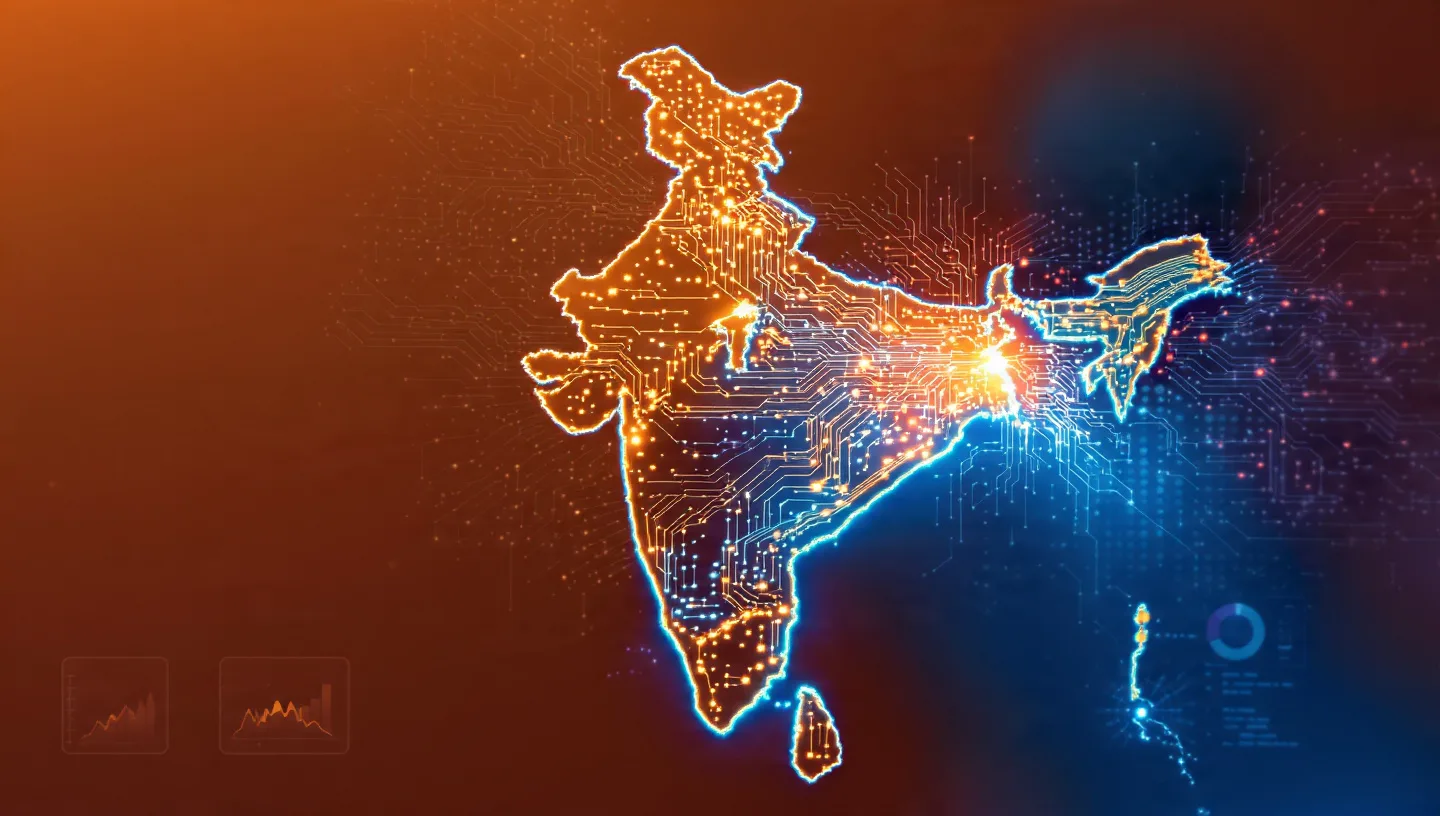

92% of Indian workers use AI tools several times a week.
That is not just the highest rate in the world. It is not even close.
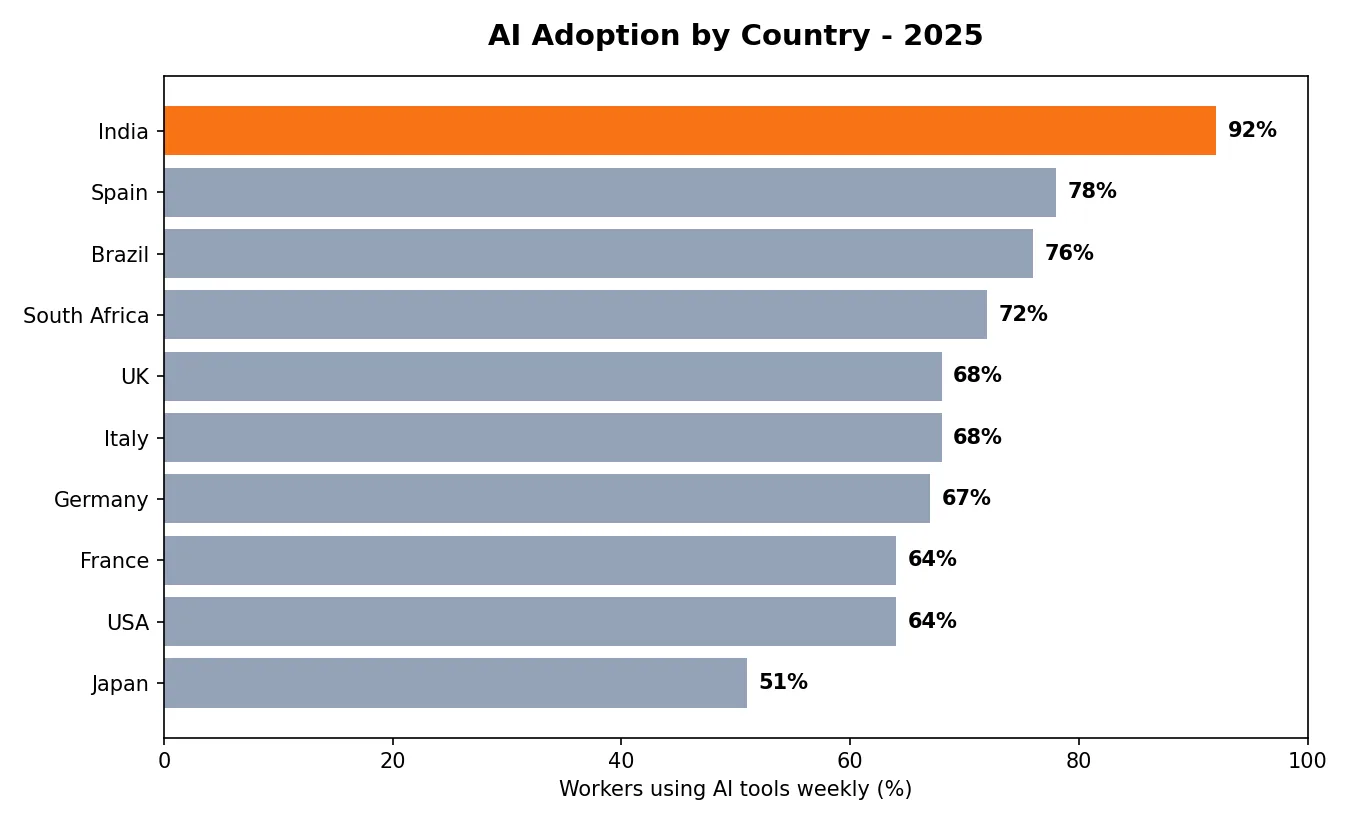
Spain comes next at 78%. The United States — the country that built most of this technology — sits at 64%. Japan, which gave the world industrial robots, is last among major economies at 51%.
India did not get here by accident. We got here because necessity drives adoption faster than ambition ever can. And now that lead is driving a whole new market which could be worth $38 billion by 2030 .
AI Observability.
When nine out of ten workers use AI every week, companies run into a problem they did not expect: they cannot see what their AI is actually doing. They cannot tell when it fails, why it fails, or how much each failure costs them.
That problem has a name: AI observability.
To keep it in simpler terms ,Observability is the black box inside a plane. It does not just confirm there was a problem. It shows you the exact sequence of events that caused it — the altitude, the speed, the last command from the pilot.
For AI, observability saves the question, the answer, the model version, the cost, and the language it ran in. If something goes wrong, you do not guess. You replay it, frame by frame.
If monitoring says it failed, observability lets you watch the exact moment it did.
Why India Needs This More Than Anyone
Because here, the stakes are not abstract.
85% of Indians already accept AI in healthcare — more than the US at 50%, more than the UK at 43%. When a doctor in Patna or a patient in Pune acts on an AI recommendation, a silent model failure is not a product bug. It is a real-world consequence.
We also run AI in ways no Western tool was built to handle: a dozen languages, low-cost Android phones, margins that leave almost no room for waste. A mo
And we cannot simply hire our way to reliability. Indian firms use more AI than almost any country on earth, yet we face a 40% shortage in AI talent — far above the global average of 28%. We need software that watches AI for us.
on earth, yet we face a 40% shortage in AI talent — far above the global average of 28%. We need software that watches AI for us.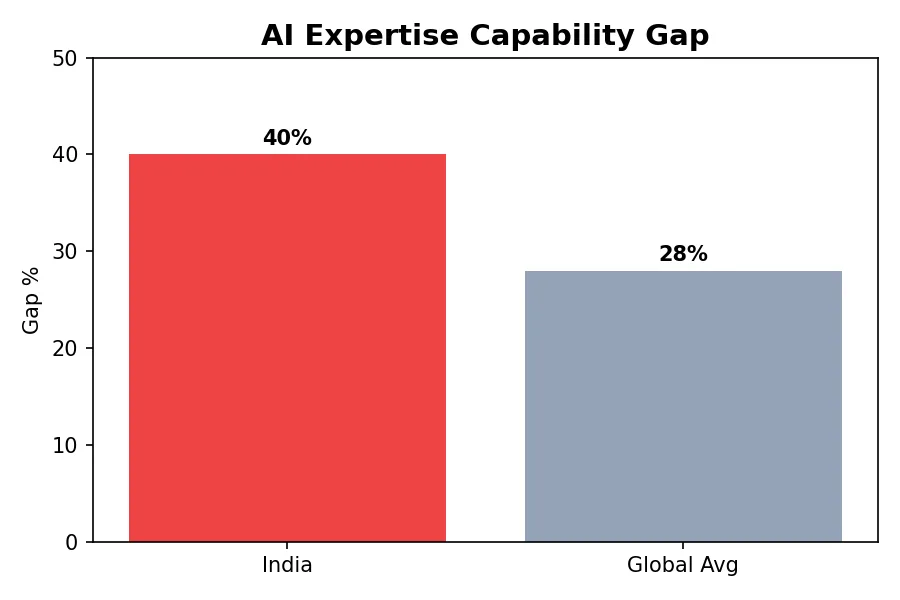
This Is Your Moment
UPI did not just change payments. It changed
Students, builders, founders — do not build another chatbot.
ure that makes AI trustworthy enough to run everything else on top of it.Students, builders, founders — do not build another chatbot.
Build the tool that traces every AI decision. Test it in Tamil, Marathi, and Bengali. Show the real cost per query, per user, per rupee. Make AI accountable.
India adopted AI first. The world will watch what we build next.
Build it here. Build it for us.
You would love to read next :

Discover more from WireUnwired Research
Subscribe to get the latest posts sent to your email.