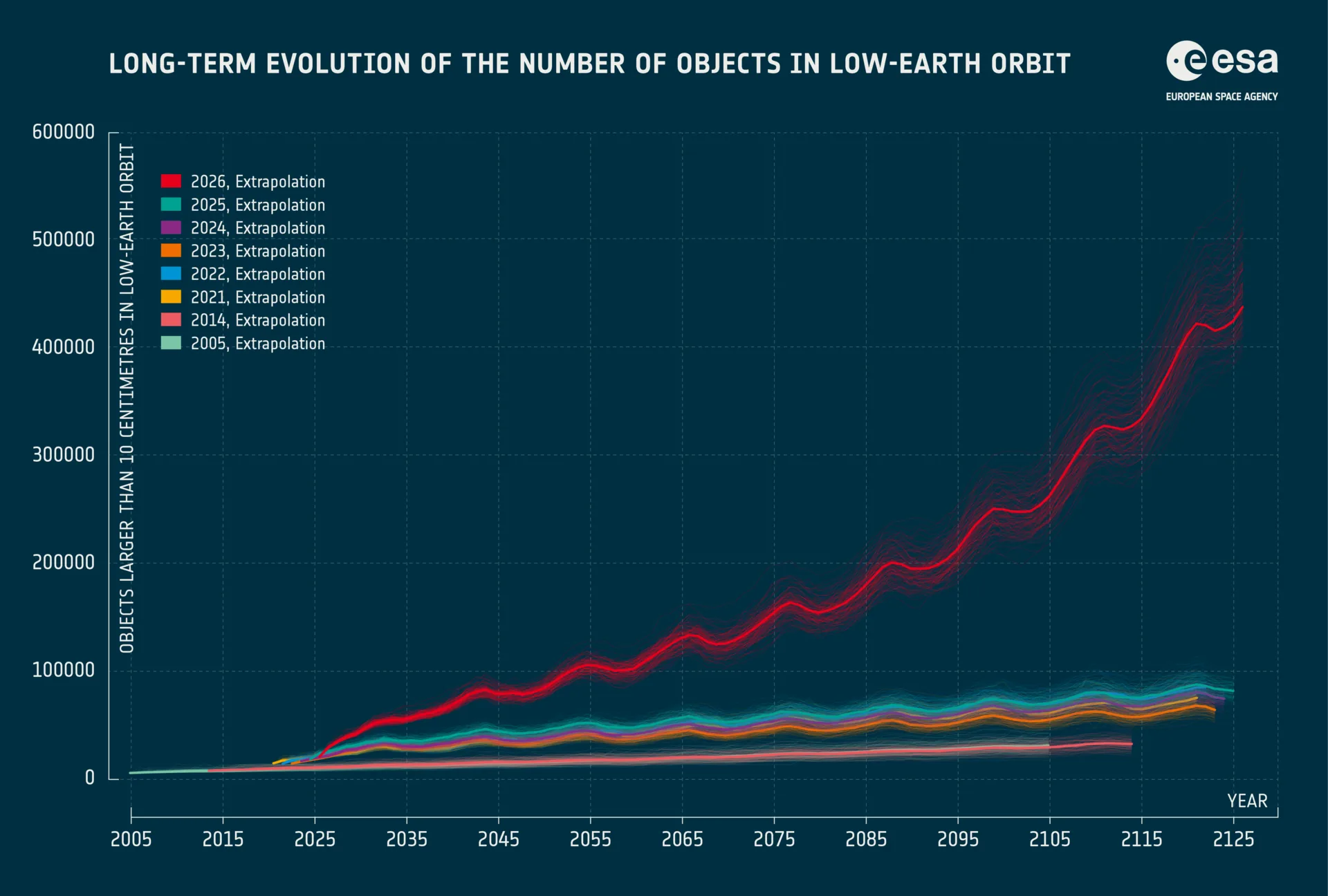
A new European report has raised serious alarms about the growing risk of orbital collisions as Earth’s skies become increa
The report highlights the danger of cascading debris events — the Kessler Syndrome — where one collision triggers a chain reaction of further crashes. Such a scenario space agencies are calling for urgent action: stricter space‑traffic management, mandatory deorbiting timelines, and accelerated investment in debris‑removal technologies. The report also stresses the need for international coordination, noting that orbital space is a shared global resource.
e agencies are calling for urgent action: stricter space‑traffic management, mandatory deorbiting timelines, and accelerated investment in debris‑removal technologies. The report also stresses the need for international coordination, noting that orbital space is a shared global resource.This warning comes as a new wave of companies step up to tackle the debris challenge. Europe’s ClearSpace is developing robotic missions to capture and deorbit defunct satellites, while Japan’s Astroscale is testing magnetic docking systems for debris removal. India too has emerging players: startups like Manastu Space and Digantara are building propulsion and space‑situational awareness solutions, aiming to make debris tracking and removal more affordable and scalable. These ventures highlight how innovation is spreading globally, with Indian firms positioning themselves as key contributors to orbital safety.
Discover more from WireUnwired Research
Subscribe to get the latest posts sent to your email.