Growing Potatoes in Moon Dust Requires One Crucial Additive
NASA plans to build a permanent moon base for astronauts, but feeding crews round the clock requires finding local food sources. Hauling every meal from Earth costs a fortune, forcing scientists to look directly at the lunar surface for agricultural answers.
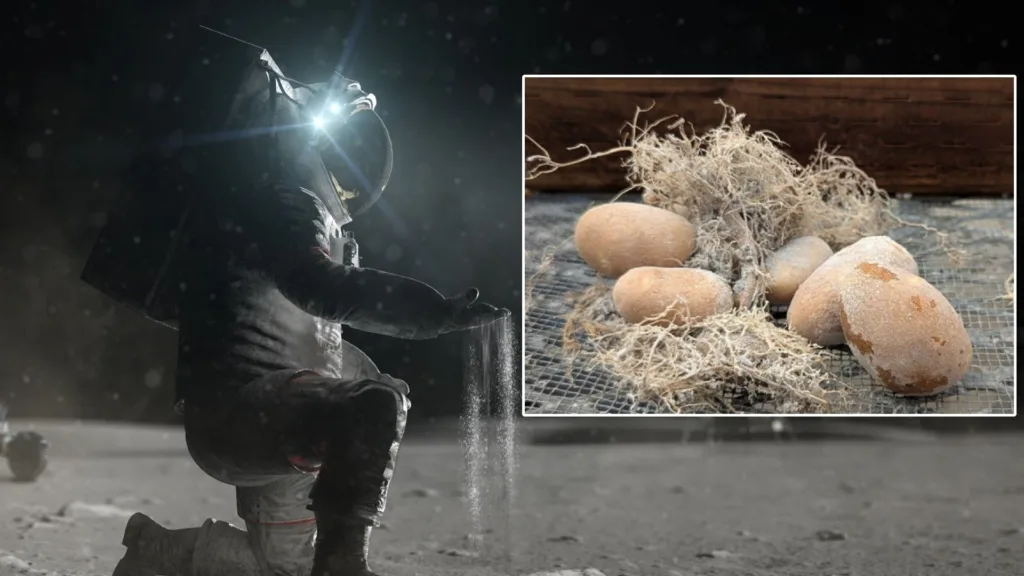
NASA plans to build a permanent moon base for astronauts, but feeding crews round the clock requires finding local food sources. Hauling every meal from Earth costs a fortune, forcing scientists to look directly at the lunar surface for agricultural answers. Researchers at Oregon State University recently raised potatoes using simulated moon dust representing both mare and highland regions.
The plants completed their entire life cycle in the synthetic soil, proving that lunar farming might actually work. Pure regolith, the sharp dust and rocks covering the moon, contains toxic compounds that prevent crops from growing on their own. To solve this problem, the research team mixed the fake dust with worm-casting compost at varying levels.
A mixture containing 30 percent vermicompost allowed the potatoes to grow just as well as they would in regular terrestrial soil. Our read is that hauling concentrated organic compost from Earth will prove far cheaper than shipping bulky finished food supplies to a lunar base. Future crews may carry compact nutrient packs to blend with local rock dust, turning the moon itself into a giant farm.
Watch for whether upcoming missions test these compost mixtures in actual low-gravity environments.
Sources & updates
AI-assisted brief based on the original reporting.
Original report: Space.com
Source published: 24 Nov 2026, 03:30
Image credit: Space.com
The story so far
Earlier coverage connected by shared names and topics. Follow the dates to see how coverage developed; these links do not imply every article describes the same event.
 NASA Commits Billions to Build a Moon Base Before Astronauts Return
NASA wants a working moon base for astronauts by 2032, and it is spending billions to build the logistics before anyone lands.…
Connected by: MoonEARLIER COVERAGE- How Apollo 12 Turned a Moon Landing Into a Scientific Tool
When Apollo 12 launched on November 14, 1969, it faced a high-stakes challenge that went beyond merely reaching the moon. The previous…
Connected by: MoonEARLIER COVERAGE - Scientists Call for a Lunar Moratorium to Prevent a Space Gold Rush
Researchers are sounding the alarm over plans to industrialize the moon before global regulations can catch up. Both the U.S. and China…
Connected by: ResearchersEARLIER COVERAGE - NASA Wants a Lunar Nuclear Reactor by 2030 to Beat the Two-Week Night
Solar panels cannot survive a lunar night that lasts two weeks. To keep habitats and rovers running when the sun goes down,…
Connected by: EarthEARLIER COVERAGE - NOWGrowing Potatoes in Moon Dust Requires One Crucial AdditiveCURRENT UPDATE

Original publication: 24 November 2026 03:30