When a 'New Star' Broke the Immutable Heavens
In November 1572, a German astronomer named Wolfgang Schulër looked up and saw a star where none had been before, shining brightly enough to rival Venus in broad daylight. To sixteenth-century thinkers, the heavens were fixed, perfect, and unalterable.
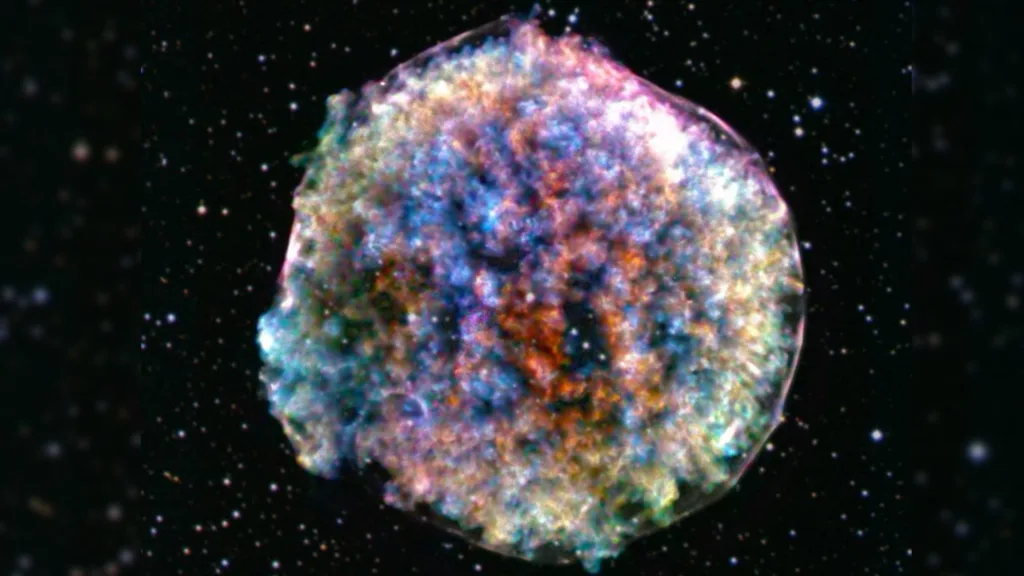
In November 1572, a German astronomer named Wolfgang Schulër looked up and saw a star where none had been before, shining brightly enough to rival Venus in broad daylight. To sixteenth-century thinkers, the heavens were fixed, perfect, and unalterable. The sudden appearance of this brilliant object threw scholars into confusion because it fundamentally broke the prevailing dogma that the universe never changed.
While Schulër spotted it first, Danish astronomer Tycho Brahe immortalized the event by studying it in detail and publishing a book about the mysterious phenomenon. Brahe tracked the object as it remained visible to the naked eye for sixteen months, creating a meticulous record of its fading light.
Centuries later, scientists used those historical notes to classify the event as a Type Ia supernova, caused by a white dwarf pulling material from a partner star until it detonated. Our read is that Brahe did not just catalog a distant explosion; his rigorous observations forced a reluctant scientific community to accept that the celestial sphere was dynamic and mortal, marking a crucial crack in medieval cosmology.
That ancient disruption still echoes in modern astronomy as researchers watch recurring novae like T Corona Borealis for similar outbursts.
When a single dead star can rewrite human understanding of reality just by flaring in the constellation Cassiopeia, it proves that looking deep into the past remains our best tool for decoding the active universe.
The story so far
Earlier coverage connected by shared names and topics. Follow the dates to see how coverage developed; these links do not imply every article describes the same event.
 China's Secretive Space Plane Is Flying Over the US This Week
Early risers across the United States have a rare window to spot China's secretive Shenlong space plane with the naked eye. The…
Connected by: NovemberEARLIER COVERAGE- Five bright planets line up for a rare November skywatching window
November offers a rare celestial alignment for skywatchers willing to divide their time between comfortable evening hours and the crack of dawn.…
Connected by: NovemberEARLIER COVERAGE - How Star Trek: Deep Space Nine Pulled Off TV's Most Audacious Time-Travel Trick
When television anniversaries arrive, networks usually settle for clip shows or retrospective panels. Thirty years into the franchise, Star Trek decided to…
Connected by: StarEARLIER COVERAGE - When the Lone Star State turns blue, where does Elon Musk land?
Elon Musk bet heavily on Texas, moving his companies and pouring hundreds of millions of dollars into Republican campaigns. Then a historic…
Connected by: WhileEARLIER COVERAGE - NOWWhen a 'New Star' Broke the Immutable HeavensCURRENT UPDATE



Original publication: 7 November 2026 03:35