
The great Halley's Comet disappointment of 1986 — and the discoveries that changed astronomy forever
In 1986, Halley’s Comet returned to Earth’s sky, but the spectacle many had imagined never materialized.
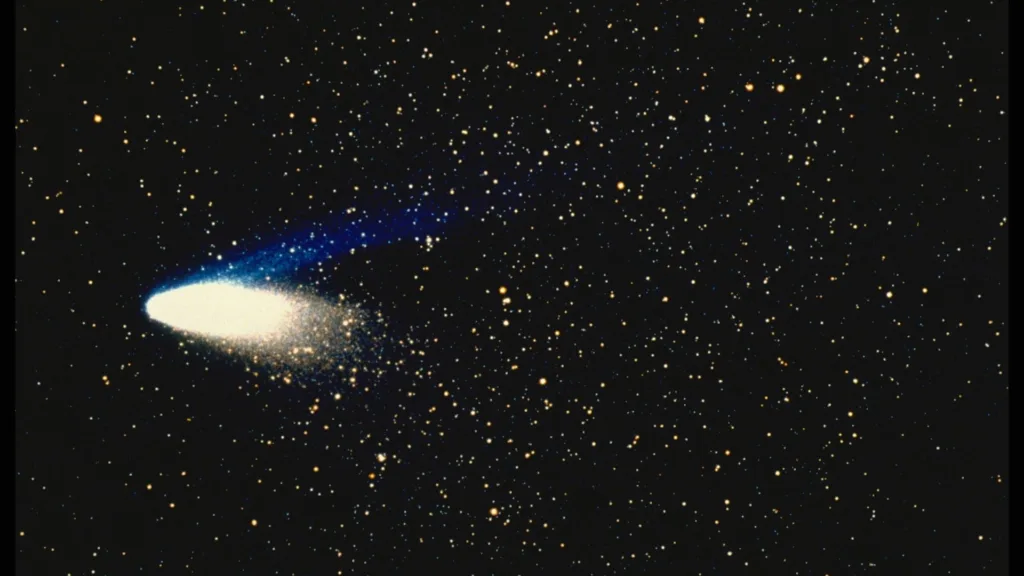
In 1986, Halley’s Comet returned to Earth’s sky, but the spectacle many had imagined never materialized. The comet appeared only as a faint third‑magnitude object with a short tail, and it was hidden behind the Sun for much of its closest approach. Light pollution in U.S. cities and the comet’s distance—about three times farther than in 1910—made it hard to see, and the public was left disappointed.
At the same time, an international fleet of spacecraft—Japan’s Sakigake and Suisei, the Soviet Union’s VEGA 1 and VEGA 2, NASA’s International Cometary Explorer, and the European Space Agency’s Giotto—plunged into the comet’s coma. Giotto passed within 600 km of the nucleus, while the VEGA probes approached within 8,500 km.
The images revealed a peanut‑shaped, 14 km long nucleus that spins every 7.4 days and ejects powerful dust jets from three active regions. These encounters turned a public disappointment into a scientific milestone, showing that Halley’s dark, dust‑encrusted surface can produce bright comae and tails when heated by the Sun.
The data also explained why the comet’s appearance varies so much from one visit to the next.
Later, a 1991 outburst—300 times brighter than expected—remained unexplained,
WireUnWired turns the supplied report into a clearer brief, preserves the original publisher and author details, and adds relevant context without hiding where the information came from.
Relevant WireUnWired coverage is connected so one story can lead into the larger technology context.
Original publication: 13 October 2026 17:30
 NASA — Recently PublishedNASA to Host Briefing on Upcoming Spacewalks to Complete Space Station Solar Array Installations
 NASA — Recently PublishedNASA Astronauts to Answer Questions from Florida Students
 NASA — Recently PublishedAstronomers Use NASA’s Chandra Observatory to Explain the Formation of the Treble Clef Galaxy Cluster Collision