Scientists find 'gemstones' in atmosphere of bizarre, scorching-hot 'marshmallow' exoplanet
Astronomers using the James Webb Space Telescope have mapped the complex atmosphere of WASP-17b, an exoplanet located roughly 1,300 light-years from Earth.
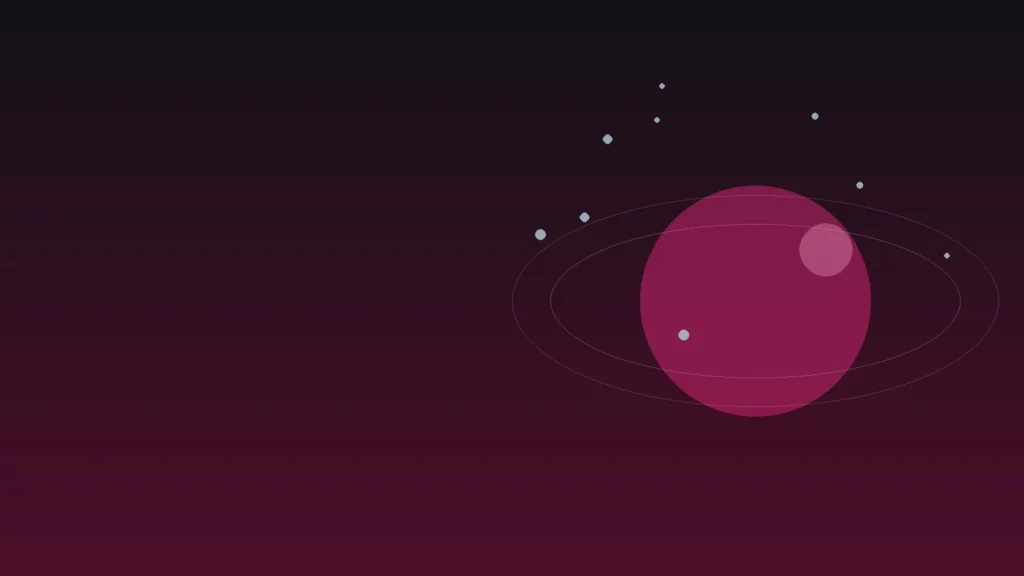
Astronomers using the James Webb Space Telescope have mapped the complex atmosphere of WASP-17b, an exoplanet located roughly 1,300 light-years from Earth. The planet measures about twice the width of Jupiter despite holding only 0.8 times its mass, giving the distant world a puffy consistency. Researchers applied a new analytical approach called transmission strings to track starlight passing through the planet's outer edge as it crossed in front of its host star.
This method allowed scientists to move beyond traditional flat-circle models and map the atmosphere in three dimensions. The data revealed that WASP-17b features a structured ring shape with prominent localized anomalies that scientists compared to gemstones. The planetary analysis showed that high temperatures and chemical compositions shift dramatically between the dayside and nightside.
One prominent atmospheric feature forms where hot winds reach the equator and the cooler nightside expands. Because the planet sits extremely close to its parent star, it remains tidally locked with one permanent day side and one night side. Published on October 14 in Nature Astronomy, the findings provide a working proof of concept that distant planets can be studied as dynamic three-dimensional objects.
Researchers stated that the results align closely with existing theoretical models
The story so far
Earlier coverage connected by shared names and topics. Follow the dates to see how coverage developed; these links do not imply every article describes the same event.
 Pioneer Labs researchers engineer a new microbe named sPL.001 to help humanity settle Mars.
Researchers at Pioneer Labs have engineered a microbe named sPL.001 designed to help humanity settle and eventually terraform Mars. The nonprofit biotechnology…
Connected by: ResearchersEARLIER COVERAGE- NASA Prepares SpaceX CRS-35 Mission to Launch Human Health and Plant Experiments to Space Station
NASA is preparing to send human health, plant, and bacterial experiments to the International Space Station on SpaceX’s 35th commercial resupply mission…
Connected by: ResearchersEARLIER COVERAGE - Planetary genealogy: Milky Way worlds belong to 1 of 2 ‘families,’ scientists find
Scientists have discovered that planetary systems in the Milky Way belong to two distinct families that shape their evolution and survival. Researchers…
Connected by: ResearchersEARLIER COVERAGE - Astronomers using the ALMA telescope detect a chemical starter kit for life around young stars.
Astronomers studying planet-forming regions around young stars have detected a crucial chemical starter kit that could reveal conditions necessary for life. Using…
Connected by: AstronomersEARLIER COVERAGE - NOWScientists find 'gemstones' in atmosphere of bizarre, scorching-hot 'marshmallow' exoplanetCURRENT UPDATE


Original publication: 16 October 2026 23:30