China’s Long March 2F Launches Pakistan’s First Astronaut to Tiangong Space Station
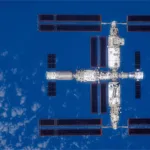
China’s space station is about to welcome its first foreign astronaut, a Pakistani payload specialist who will spend a week aboard Tiangong before returning on the departing Shenzhou‑23 vehicle.

China’s space station is about to welcome its first foreign astronaut, a Pakistani payload specialist who will spend a week aboard Tiangong before returning on the departing Shenzhou‑23 vehicle. The move is more than a diplomatic gesture; it gives China a chance to extend a crew’s stay to a full year, the longest yet, and to collect data on how the human body reacts to months in orbit.
The Long March 2F rocket that will carry the Shenzhou‑24 crew has just been rolled out to the launch pad at Jiuquan Satellite Launch Center. The 191‑foot‑tall vehicle was moved 0.93 miles from a vertical integration building in about two hours, a feat that showcases China’s logistical precision.
The rocket’s transport mechanism—an automated rail system—ensures the vehicle is positioned exactly where the launch pad requires, minimizing the risk of misalignment. The crew arrangement is unusual. The Pakistani astronaut will stay aboard Tiangong for roughly one week, then return on the Shenzhou‑23 spacecraft, which is already carrying a Chinese astronaut who will remain for another half year.
That extra‑long mission will provide the first year‑long stay in orbit for a Chinese crew member, giving scientists a rare window into long‑term physiological changes that are critical for future lunar and Mars missions.
Shenzhou‑24 is China’s 18th crewed mission and the first to include a foreign national on a Shenzhou spacecraft.
The country’s human‑spaceflight program began in 1992, launched its first crewed mission in 2003, and has kept Tiangong continuously crewed since 2022.
The new arrangement builds on that legacy while opening the door to more international participants.
Our read: By pairing a short‑term international visit with a year‑long domestic stay, China is using the Shenzhou‑24 mission as a testbed for extended crew operations and international collaboration.
The success of this partnership could pave the way for more foreign astronauts, space tourists, and even joint lunar expeditions.
Watch how this experiment shapes the next chapter of human spaceflight.
The story so far
Earlier coverage connected by shared names and topics. Follow the dates to see how coverage developed; these links do not imply every article describes the same event.
- Florida Students Get Live Call From NASA Astronauts on the International Space Station
On Tuesday, a classroom in St. Johns, Florida, will be replaced by a live feed from the International Space Station. Students will…
Connected by: StationEARLIER COVERAGE  When the Saturn V Shook Florida and Restored NASA's Hope
When NASA unleashed the Saturn V rocket for its maiden voyage on November 9, 1967, the sheer force caught onlookers entirely off…
Connected by: CenterEARLIER COVERAGE- Pakistan’s Astronaut to Become First International Visitor on China’s Tiangong Space Station
A Pakistani astronaut is set to launch on China’s Shenzhou 24 mission, becoming the first international visitor to the Tiangong space station.…
Connected by: AstronautEARLIER COVERAGE - Next Space Station Supply Run Targets Cancer Drugs and Muscle Loss Research
A Cygnus XL spacecraft will carry a heavy load of science investigations toward the International Space Station this month. NASA and Northrop…
Connected by: StationEARLIER COVERAGE - NOWChina’s Long March 2F Launches Pakistan’s First Astronaut to Tiangong Space StationCURRENT UPDATE


Original publication: 20 November 2026 00:30