NASA’s Crew-13 Mission Puts Blood Clots and Landing Skills Under the Space Station Microscope
Weightlessness disrupts normal blood flow in human veins, raising the risk of dangerous clots during spaceflight. To tackle this hazard, astronauts on the upcoming SpaceX Crew-13 mission will participate in a collaborative European Space Agency project called Venous Haemostasis.
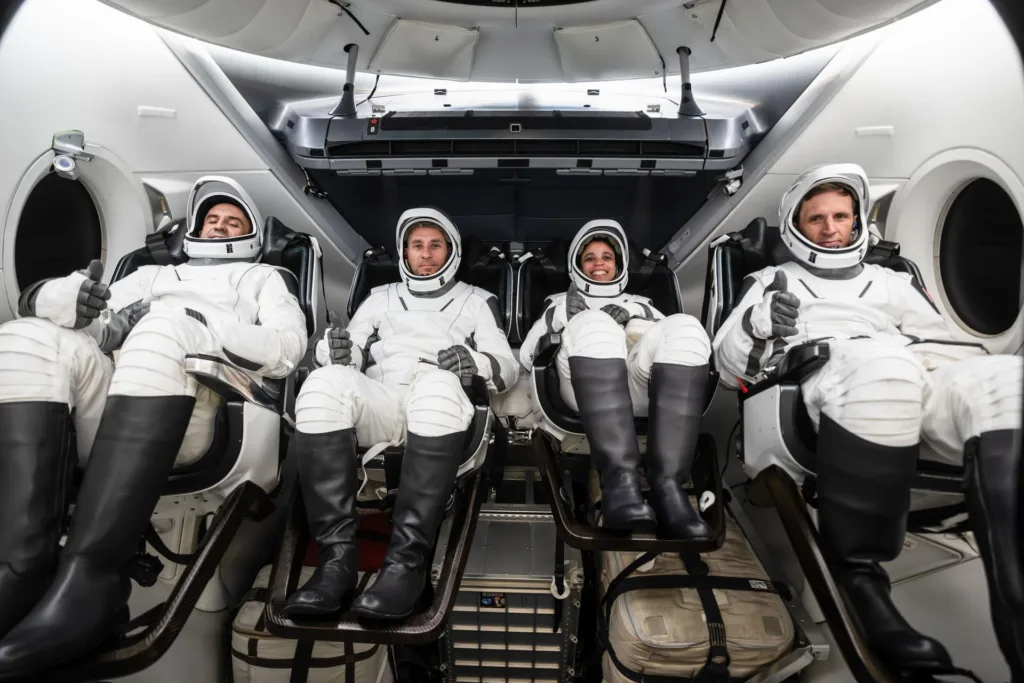
Weightlessness disrupts normal blood flow in human veins, raising the risk of dangerous clots during spaceflight. To tackle this hazard, astronauts on the upcoming SpaceX Crew-13 mission will participate in a collaborative European Space Agency project called Venous Haemostasis. By coordinating blood draws and physiological scans before, during, and after flight, researchers aim to discover why circulation changes affect some crew members and spare others.
That data could eventually lead to better clot treatments both in orbit and on Earth. Beyond circulation, the mission targets the neurological and sensory toll of long-duration spaceflight. A performance investigation named Manual Piloting uses lunar-landing simulations to test if refresher training helps astronauts handle difficult touch downs after months in microgravity.
Meanwhile, the B-Complex study evaluates whether daily B-vitamin supplements can prevent Spaceflight-Associated Neuro-ocular Syndrome, a condition that alters eye structure. Our read: these overlapping medical tests show that NASA is shifting focus from merely surviving space to mastering human operational limits before deep-space missions begin. Additional experiments will measure physical forces during return-to-earth to refine re-entry hardware and track exercise routines to prepare for smaller spacecraft lacking treadmills.
Michael Stenger, chief scientist for NASA's Human Research Program, notes these efforts pave the way for Artemis moon missions and future expeditions to Mars.
Watch whether these targeted countermeasures keep crews healthy enough to make deep-space travel feasible.
The story so far
Earlier coverage connected by shared names and topics. Follow the dates to see how coverage developed; these links do not imply every article describes the same event.
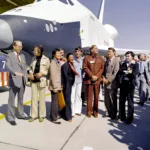
 NASA Unveils Enterprise, the First Space Shuttle
Fifty years ago, on September 17, 1976—Constitution Day during America’s bicentennial year—NASA publicly unveiled its first space shuttle orbiter, OV-101. The agency…
Connected by: SpaceEARLIER COVERAGE- NASA Awards SpaceX Three Crew Flights to Space Station
NASA just secured its pathway to the International Space Station for the rest of the decade. The agency awarded SpaceX three additional…
Connected by: MeanwhileEARLIER COVERAGE - NASA-JAXA XRISM Mission Sees Pulsar Gathering Companion’s ‘Wind’
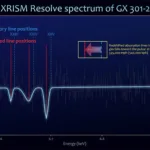
Using data from the Japan-led XRISM (X-ray Imaging and Spectroscopy Mission) observatory, astronomers have directly observed a giant star’s outflow, known as…
Connected by: MissionEARLIER COVERAGE - NASA Kicks Off Nationwide Effort to Prepare Tomorrow’s Space Workforce
On September 15, 2026, NASA launched its State Hubs for Skilled Technical Workforce initiative with awardees at Space Center Houston. Agency leadership…
Connected by: AgencyEARLIER COVERAGE - NOWNASA’s Crew-13 Mission Puts Blood Clots and Landing Skills Under the Space Station MicroscopeCURRENT UPDATE