A Cray-1 supercomputer replica from 30 "obsolete" Mac Minis
Spain's Museo de Historia de la Computación has unveiled a full-scale visual replica of the legendary 1976 Cray-1 supercomputer. The project marks the fiftieth anniversary of both the Cray-1 and Apple's founding.
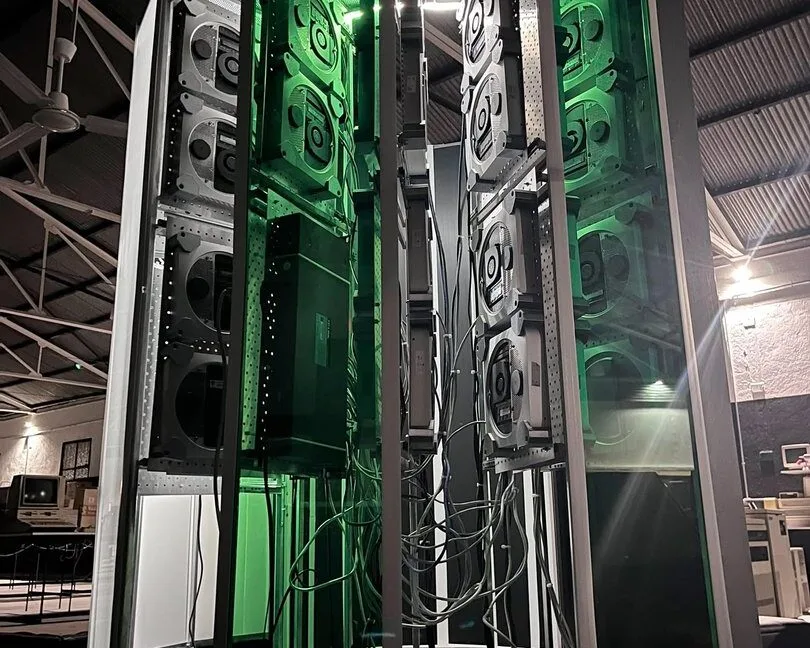
Spain's Museo de Historia de la Computación has unveiled a full-scale visual replica of the legendary 1976 Cray-1 supercomputer. The project marks the fiftieth anniversary of both the Cray-1 and Apple's founding. The museum team built the replica using thirty obsolete Mac Minis from 2012 and 2014, networked together into a cluster.
Five units use quad-core i7 chips, while twenty-five use dual-core i5 processors. In recent tests, the sixty-four active processing cores delivered a combined 1.3 teraflops of performance. The team previously reached 1.5 teraflops using all seventy available cores before a single node went offline. Benchmarks ran via a custom Python script for matrix multiplication.
The project highlights massive shifts in computer architecture over the decades. The original Cray-1 used vector processing to apply single instructions to multiple data streams at once, peaking at roughly 160 megaflops. In contrast, the replica uses consumer hardware arranged in a parallel cluster distributed across independent processors. The build serves as an educational tool for visitors to compare vintage research technology with modern consumer hardware.
It remains to be seen whether the offline node will be repaired to restore peak testing performance.
WireUnWired turns the supplied report into a clearer brief, preserves the original publisher and author details, and adds relevant context without hiding where the information came from.
Relevant WireUnWired coverage is connected so one story can lead into the larger technology context.
Original publication: 10 October 2026 03:21