Google Engineer Convicted of AI Espionage—Faces Up to 70 Years in Prison

Ex-Google engineer convicted for stealing AI secrets faces 70 years. Mirrors Taiwan's TSMC case—AI now treated as national security threat, not just IP.

Ex-Google engineer convicted for stealing AI secrets faces 70 years. Mirrors Taiwan's TSMC case—AI now treated as national security threat, not just IP.
RISC-V's customizable design enables innovation but makes verification impossible. Testing trillions of instruction combos risks fragmentation. Read to know more

90% of insurance execs are increasing AI spend, but employee usage dropped 10% and only 40% feel trained. The disconnect could waste billions
Deloitte warns: Companies deploying autonomous AI faster than safety protocols. 74% adoption by 2028, but governance gaps create major risks.
LLMs choke on million-token contexts, but recursion changes that. Prime Intellect's RLM spawns sub-models to surgically dissect data.
The era of 'Assembled in India' is ending. The era of 'Owned by India' has begun. From Lava's UK launch to Tata's new fabs, we connect the dots on the 18-month roadmap to Hardware Sovereignty.

For 20 years, the iPhone dictated TSMC's roadmap. That era is over. We analyze the "Revenue Density" math that explains why TSMC is pivoting $56B in Capex toward NVIDIA, leaving smartphone giants to pay the bill.

The 'BARBIE' phenomenon is not a cultural trend; it is a geopolitical asset shift. WireUnwired analyzes how returning US undergrads act as vectors for critical VLSI and AI transfer to India's deep-tech ecosystem.
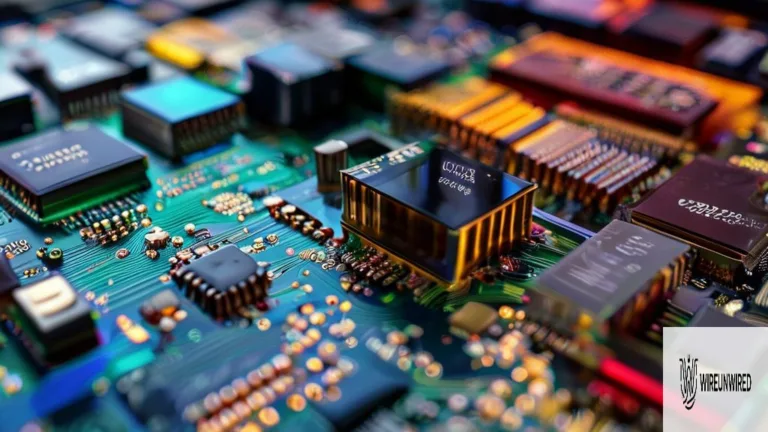
The 20-year era of "Silicon-on-Plastic" is ending. We analyze the 3 critical reasons—Warpage, Speed, and the "Rectangular Revolution"—driving the shift to Glass Core substrates by 2026.
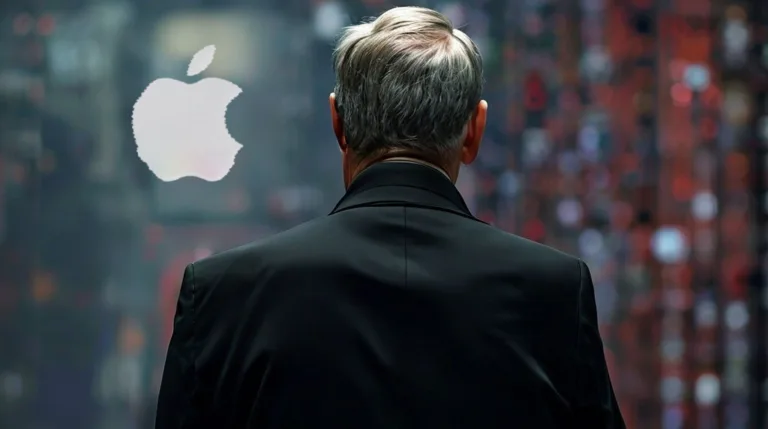
Apple has secured 100% of TSMC's 2nm capacity, marking the end of the 15-year FinFET era. We analyze why the transistor's shape had to change to Gate-All-Around (GAA).

A routine API outage at 4 AM exposed a critical flaw in my security research. I analyze why relying on "Real-Time Data" is a single point of failure and the mathematical fix for resilient pipelines.

The era of "Cloud AI" is ending. We analyze how the "1-bit" revolution (BitNet) enables GPT-4 class models to run offline on phones, and why Google's controversial Tensor chip strategy was right all along.

Nvidia reached $3.6T without a CMO. The hiring of Alison Wagonfeld signals a massive shift from selling hardware to selling Sovereign AI. We analyze the math and strategy behind the pivot.
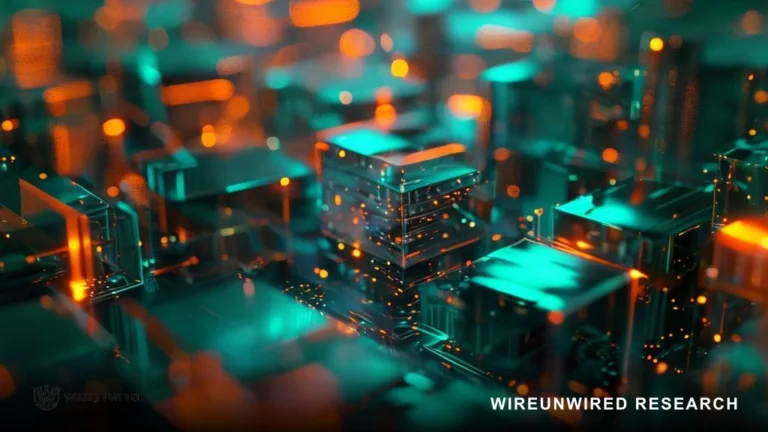
NVIDIA, Cisco, T‑Mobile and public‑sector partners have unveiled what they describe as the first AI‑native 6G wireless stack prototype in the U.S., built on NVIDIA’s AI Aerial platform. The vertically integrated architecture fuses GPU‑accelerated baseband, an AI‑driven RAN and intelligent core with new 6G application layers for spectrum agility and integrated sensing, offering an early reference design for AI‑first 6G networks.
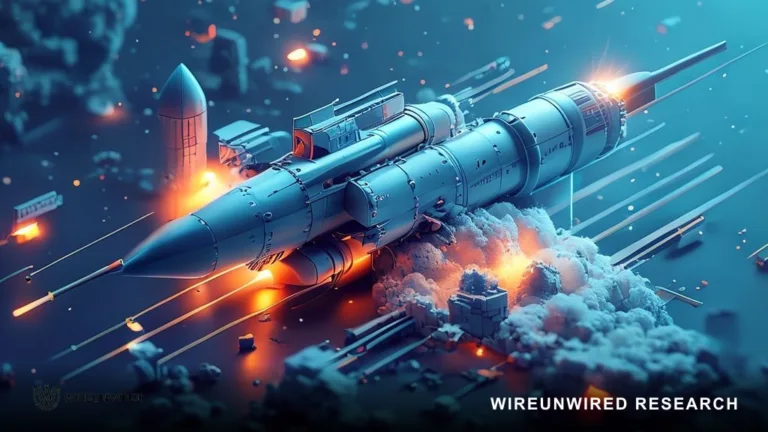
SpaceX’s upcoming Falcon 9 launch of 36 SDA Tranche 2 Tracking Layer satellites is not just another mission—it is a bulk upload of hypersonic-tracking hardware into MEO that rewires the economics of missile warning. This single flight accelerates the Pentagon’s pivot from a few GEO behemoths to a proliferated, upgradeable sensor mesh built on commercial launch cadence.
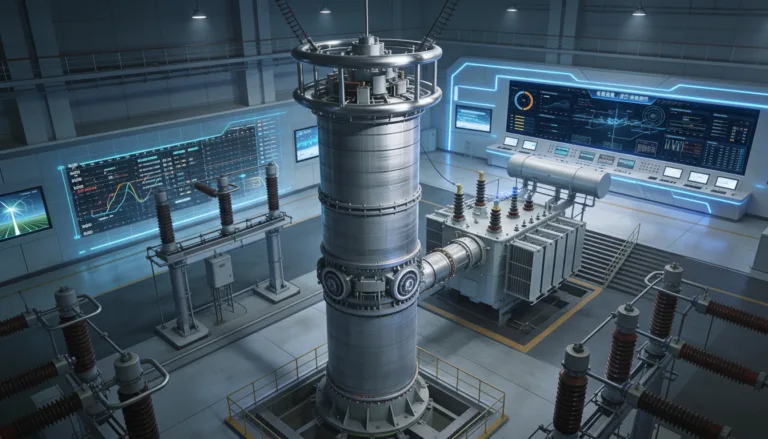
China's hybrid HVDC valve slashes grid losses 50%, powering a $500B renewable revolution. World's first live today—West plays catch-up.

Brazil & Kyrgyzstan just OK'd state BTC buys for reserves—nations betting big on crypto over crumbling fiat. Blockchain locks in transparency no central bank can touch.
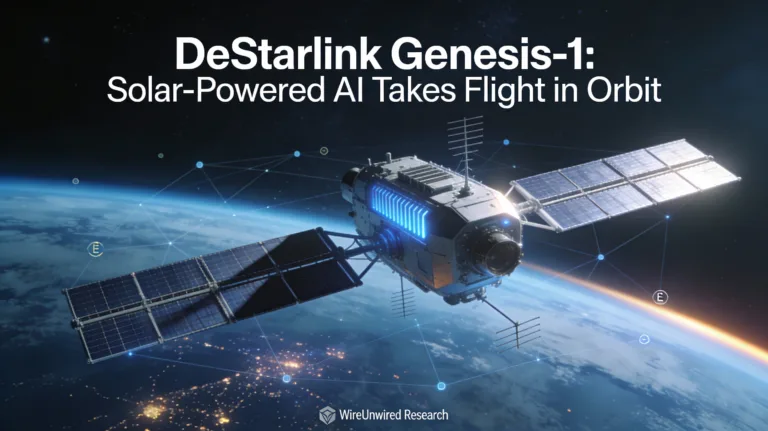
DeStarlink Genesis-1 has launched into orbit, pioneering solar-powered AI data centers cooled by space vacuum. This Singapore-Toronto collab escapes Earth's energy limits, blending AI inference, blockchain, and mesh networking for the future of cloud computing.
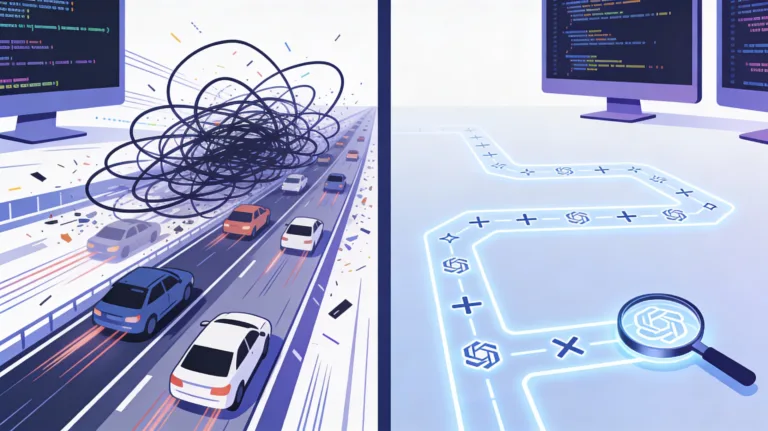
We benchmarked Python Regex vs. Loops for parsing 100,000 rows of data. The Loop was 2x faster, yet we rejected it. Discover why true engineering sometimes means choosing the 'slower' path.
China's MIIT mandates zero trust for critical ICS(
Industrial Control Systems) by 2027, targeting power, manufacturing, transport with strict security overhauls.