
On this day in space! Oct. 10, 1967: The Outer Space Treaty is ratified to lay out how countries can use outer space
The international Outer Space Treaty was officially ratified on October 10, 1967, establishing foundational rules for how nations explore and use space. More than 100 countries have ratified the agreement, which declares that space exploration must benefit all humankind.
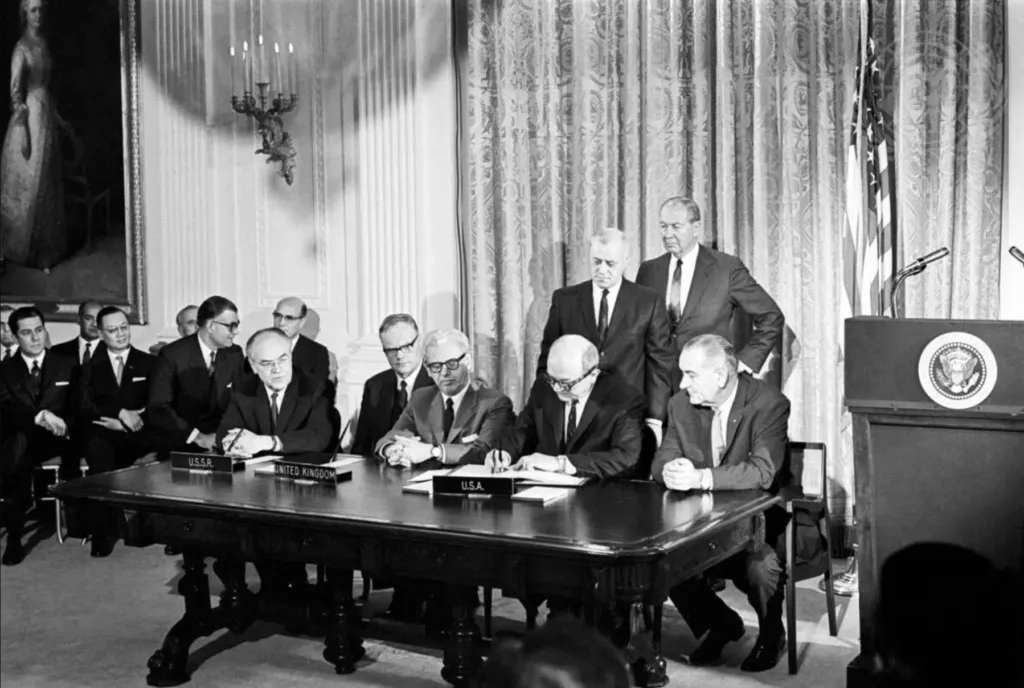
The international Outer Space Treaty was officially ratified on October 10, 1967, establishing foundational rules for how nations explore and use space. More than 100 countries have ratified the agreement, which declares that space exploration must benefit all humankind. The pact strictly bans nations from claiming territory on the moon or other celestial bodies.
It also prohibits placing nuclear weapons or other weapons of mass destruction in orbit or on celestial bodies. Additionally, signatories agreed to restrict the moon and other bodies exclusively to peaceful purposes, banning military bases, weapon testing, and maneuvers. Considered the cornerstone of modern space law, the agreement provides enforceable rules for contemporary spaceflight activities.
Beyond weapons and military limits, the treaty addresses spacecraft ownership, establishes restrictions on off-Earth property rights, and requires member nations to assist astronauts in distress during space missions or emergency landings.
WireUnWired turns the supplied report into a clearer brief, preserves the original publisher and author details, and adds relevant context without hiding where the information came from.
Relevant WireUnWired coverage is connected so one story can lead into the larger technology context.
Original publication: 10 October 2026 17:13
 NASA — Recently PublishedNASA to Host Briefing on Upcoming Spacewalks to Complete Space Station Solar Array Installations
 NASA — Recently PublishedSpaceX Falcon 9 Launches NASA CRS-35 Cargo Mission to the International Space Station on October 13NASA — Recently PublishedNASA Prepares SpaceX CRS-35 Mission to Launch Human Health and Plant Experiments to Space Station