
If you're looking, here's a "good deal" for NASA and the European Space Agency
NASA and the European Space Agency are moving forward with plans for the Laser Interferometer Space Antenna, a space-based observatory designed to detect low-frequency gravitational waves. The mission is scheduled to launch around 2035.
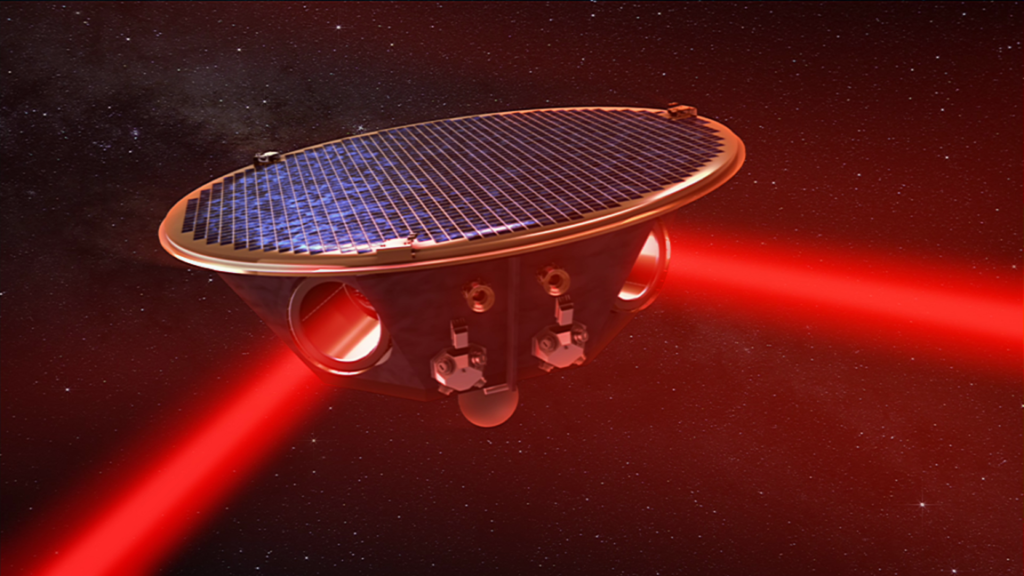
NASA and the European Space Agency are moving forward with plans for the Laser Interferometer Space Antenna, a space-based observatory designed to detect low-frequency gravitational waves. The mission is scheduled to launch around 2035. Led primarily by Europe, the observatory will use three spacecraft flying in a triangle nearly 1.6 million miles apart.
Under the current agreement, NASA is contributing roughly a third of the project's cost at an estimated $1 billion, providing essential laser transmitters, telescopes, and charge management devices in exchange for full access to the scientific data. The collaboration aligns with NASA’s renewed push for foreign partnerships that offer high leverage and cost-effective science without duplicating domestic efforts.
While the White House proposed canceling NASA’s participation in the project, Congress restored funding in the 2026 appropriations bill, giving the partnership stable backing from lawmakers. Despite this support, future joint efforts face mixed prospects as NASA narrows its international focus. While NASA is committed to the New Athena X-ray observatory, Europe recently moved forward alone on contracts for a Venus radar mapping instrument after US support wavered.
WireUnWired turns the supplied report into a clearer brief, preserves the original publisher and author details, and adds relevant context without hiding where the information came from.
Relevant WireUnWired coverage is connected so one story can lead into the larger technology context.
Original publication: 7 October 2026 16:30