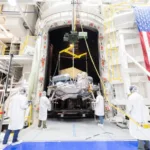
Europe's Hera Probe Arrives This Month to Inspect Aftermath of NASA's 2022 Asteroid Collision
The European Space Agency's Hera probe is arriving this month to inspect the aftermath of NASA's 2022 asteroid collision. NASA's Double Asteroid Redirection Test spacecraft deliberately slammed into a small space rock named Dimorphos on Sept.
The European Space Agency's Hera probe is arriving this month to inspect the aftermath of NASA's 2022 asteroid collision. NASA's Double Asteroid Redirection Test spacecraft deliberately slammed into a small space rock named Dimorphos on Sept. 26, 2022, to test planetary defense techniques. That initial impact successfully shortened Dimorphos's orbit around the larger asteroid Didymos by about 33 minutes.
Ground and space telescopes have monitored the system since the crash, revealing that the impact kicked up significant material and altered the orbit in complex ways that continued changing months later. Despite these observations, scientists still do not know the exact size of the crater, whether the asteroid is tumbling, or how boulders were rearranged.
Hera launched in October 2024 to investigate these unanswered questions. The probe will perform braking maneuvers starting October 15, aiming to come within 20 miles of the asteroids by early November to begin mapping the surface and searching for potential solar panel fragments from the original impact. In January, Hera will deploy two tiny companion spacecraft named Milani and Juventas.
Milani will study material composition, while Juventas will use radar to probe the asteroid's interior before attempting a landing, giving researchers their first direct look inside
WireUnWired turns the supplied report into a clearer brief, preserves the original publisher and author details, and adds relevant context without hiding where the information came from.
Relevant WireUnWired coverage is connected so one story can lead into the larger technology context.
Original publication: 14 October 2026 17:30