

⚡
WireUnwired Research • Key Insights
- XELA’s uSkin 3D sensors deliver real-time shape, force, slippage detection for human-like robot grip.
- Compact, durable design integrates into grippers for manufacturing, logistics, ag—solving dexterity bottlenecks.
- Debut at CES 2026 signals $500B humanoid robot market ignition amid Asia-US tech race.
- Cost-effective edge over rivals positions XELA for explosive adoption in automation surge.
XELA Robotics just dropped the killer app for humanoid robots: uSkin 3D tactile sensors that mimic human touch, unlocking dexterity that’s evaded bots for decades. At CES 2026, this Tokyo-Las Vegas disruptor unveiled tech poised to flood factories with tireless, precise workers—$500B market cap potential incoming.
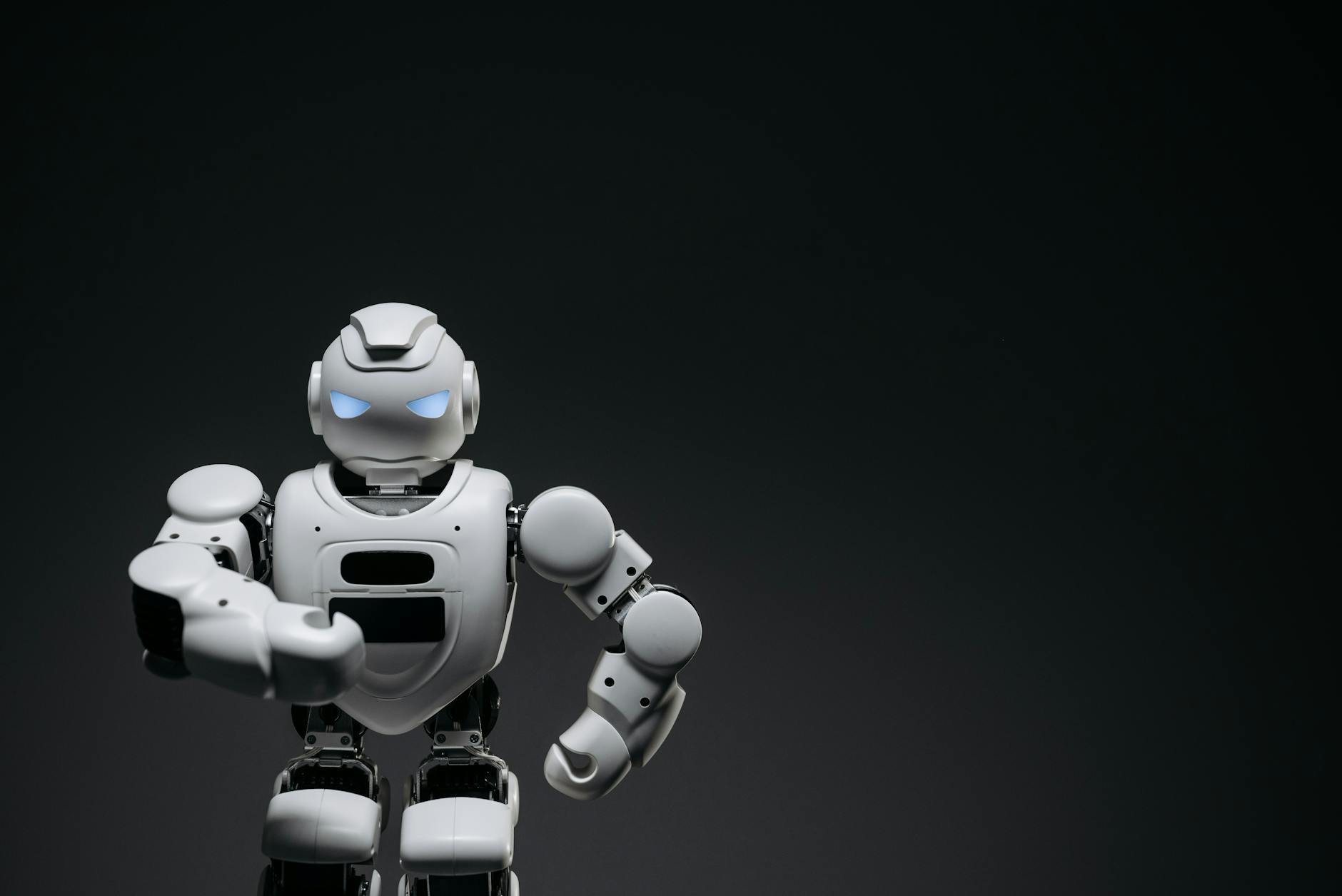
Why CES 2026 Ignites the Robot Arms Race
Three forces are converging to make 2026 the breakout year for robotics.
First, geopolitics. US-China tech decoupling is accelerating. Washington’s CHIPS Act extensions and the anticipated $100B+ National Robotics Initiative are pouring money into domestic manufacturing. That directly fuels demand for XELA’s sensors as companies reshore their supply chains. Further Japan’s Society 5.0 blueprint adds ¥10T ($65B) in subsidies, mandating humanoid deployment in eldercare and factories where labor shortages will hit 11M workers by 2030.
Second, the technology gap. Elon Musk promises 1 billion Optimus units by 2050, but dexterity remains the bottleneck. Tesla’s robots can walk, but they struggle with delicate tasks. XELA’s uSkin sensors fill that void, enabling slippage-free handling of fragile components in EV assembly and semiconductor manufacturing.
Third, business economics. Amazon spends $25B annually on warehouse automation. Walmart is deploying ag-bots to cut logistics costs by 20%. John Deere is integrating precision farming robots as global food demand surges 30% by 2030. Post-COVID labor crunches persist—US manufacturing has 600K open positions with no workers to fill them.
The timing is perfect. India’s Make in India initiative and Europe’s Green Deal both demand resilient automation. With Bitcoin’s institutional bull run drawing comparisons to robotics ETFs, investors are hunting for picks-and-shovels plays like XELA. This isn’t hype. It’s a $1.5T automation market meeting battle-tested sensors that slash retrofit costs by 50%. And as tariffs bite imported competitors, XELA’s Asia-North America positioning captures first-mover premiums.
Inside uSkin: How 3D Tactile Sensing Works
XELA’s uSkin sensors give robots human-like touch. Unlike 2D pressure pads that only detect force, uSkin captures full 3D object geometry, multi-axis contact forces (up to 6 degrees of freedom), and micro-slippage events at 1kHz refresh rates. That’s critical when handling fragile electronics or soft agricultural products.
The core technology: flexible thin-film arrays of micro-capacitive cells embedded in silicone skin. Each cell sits under 1mm pitch and detects deformation through capacitance shifts. Edge AI chips process the signals in real-time.
Integration is straightforward. Bolt uSkin onto existing grippers from Schunk or Robotiq, or attach to humanoid hands like Figure 01 and Agility Palm. Standard ROS2 interfaces mean no heavy reengineering. The sensors are IP67-rated and survive over 1 million cycles in oily, dusty industrial environments. Cost? $50-200 per unit versus $1,000+ for competing systems.
The real-time feedback loop works like this: sensors feed force-torque maps to PID controllers, enabling adaptive grasping. Power grip for heavy boxes. Precision pinch for eggs. Slippage detection uses shear-force gradients to trigger micro-adjustments before an object drops. Tests show 90% error reduction.
For industrial arms from ABB or Fanuc, palm-wide sensor arrays map full contact surfaces and optimize stacking in logistics. Humanoids gain what researchers call embodied intelligence—shape reconstruction via neural networks predicts mass and inertia for stable manipulation.
CES demos showed XELA picking irregular parts with 99% success rates, outperforming vision-only systems in low-light and low-contrast conditions. The cost advantage comes from scalable fabrication in Tokyo cleanrooms, cutting bill-of-materials costs by 70%. Power consumption? Just 50 milliwatts per sensor, perfect for battery-powered robots.
But uSkin doesn’t just sense—it enables learning. The data streams train reinforcement learning models for zero-shot tasks, bridging the simulation-to-reality gap that’s stalled robotics progress for years.

| Feature | XELA uSkin | SynTouch BioTac | GelSight |
|---|---|---|---|
| 3D Shape Detection | Yes, Real-Time | Partial | Yes (Vision-Based) |
| Slippage Sensing | Multi-Axis | Basic | No |
| Cost per Unit | $50-200 | $1,000+ | $500+ |
| Durability Cycles | 1M+ | 500K | 300K |
| Integration Ease | Plug-and-Play | Custom | Camera Req. |
The $500B Market and XELA’s Revenue Potential
Goldman Sachs projects the humanoid robotics market will reach $500B by 2035. Industrial automation adds another $250B, according to McKinsey. XELA’s uSkin sensors could capture 10-15% of the tactile sensing segment within that market.
The math: If 20 million robotic units deploy annually post-2028, and XELA maintains that market share, revenue could hit $5-10B at scale. That assumes per-unit pricing holds between $50-200 as volumes increase.
Early traction is building. XELA has partnerships with Fanuc, Japan’s $7B robotics giant, and Las Vegas integrators working on Tesla Optimus-style platforms. Agricultural deals with John Deere tap into the company’s $50B precision farming pivot.
Market momentum is visible. Robotics ETFs like BOTZ and ROBO are up 40% year-to-date in 2026, tracking similar patterns to institutional crypto inflows. IPO rumors value XELA at $2B by Q4 2026, though the company hasn’t confirmed timing.
The ROI case for customers is straightforward. A 30% improvement in picking speed translates to roughly $1M in lifetime value per unit for high-volume warehouse operations. Multiply that across thousands of units and the savings add up quickly.
Geopolitical factors help. US tariffs on Chinese-made robots are redirecting orders toward companies with manufacturing outside China. XELA’s dual-base production model in Tokyo and potential North American facilities position it well.
The bull case hinges on scale. If Figure AI or Tesla ramp production to 100,000 humanoid units per year, sensor suppliers with proven durability could see valuations expand 5x from current levels. That’s the scenario driving institutional interest—robotics entering the same adoption curve that pulled $87B into crypto ETPs since 2024.
Risks remain. Competition from established sensor manufacturers, pricing pressure as volumes increase, and execution challenges in scaling production. But if dexterity becomes the unlocking factor for mass humanoid deployment, XELA sits at a critical chokepoint.
FAQ
What makes uSkin superior for humanoids? Real-time 3D force/slippage across full hand enables human-level manipulation without vision dependency.
Target industries? Manufacturing (precision assembly), logistics (picking), warehousing (stacking), agriculture (harvesting).
Availability timeline? Shipping Q2 2026; CES demos sparked 500+ pre-orders.
Competitive moat? Cost/durability combo unbeatable; seamless retrofit crushes custom rivals.
Join our WireUnwired Research community on WhatsApp or LinkedIn.
Discover more from WireUnwired Research
Subscribe to get the latest posts sent to your email.